Overview
Scoliosis is often first noticed by someone else. A parent sees that one shoulder sits higher than the other, a shoulder blade sticks out, or a school uniform hangs unevenly at the waist. In an adult, the first sign may be a slow change in posture, back pain, or leg pain when walking.
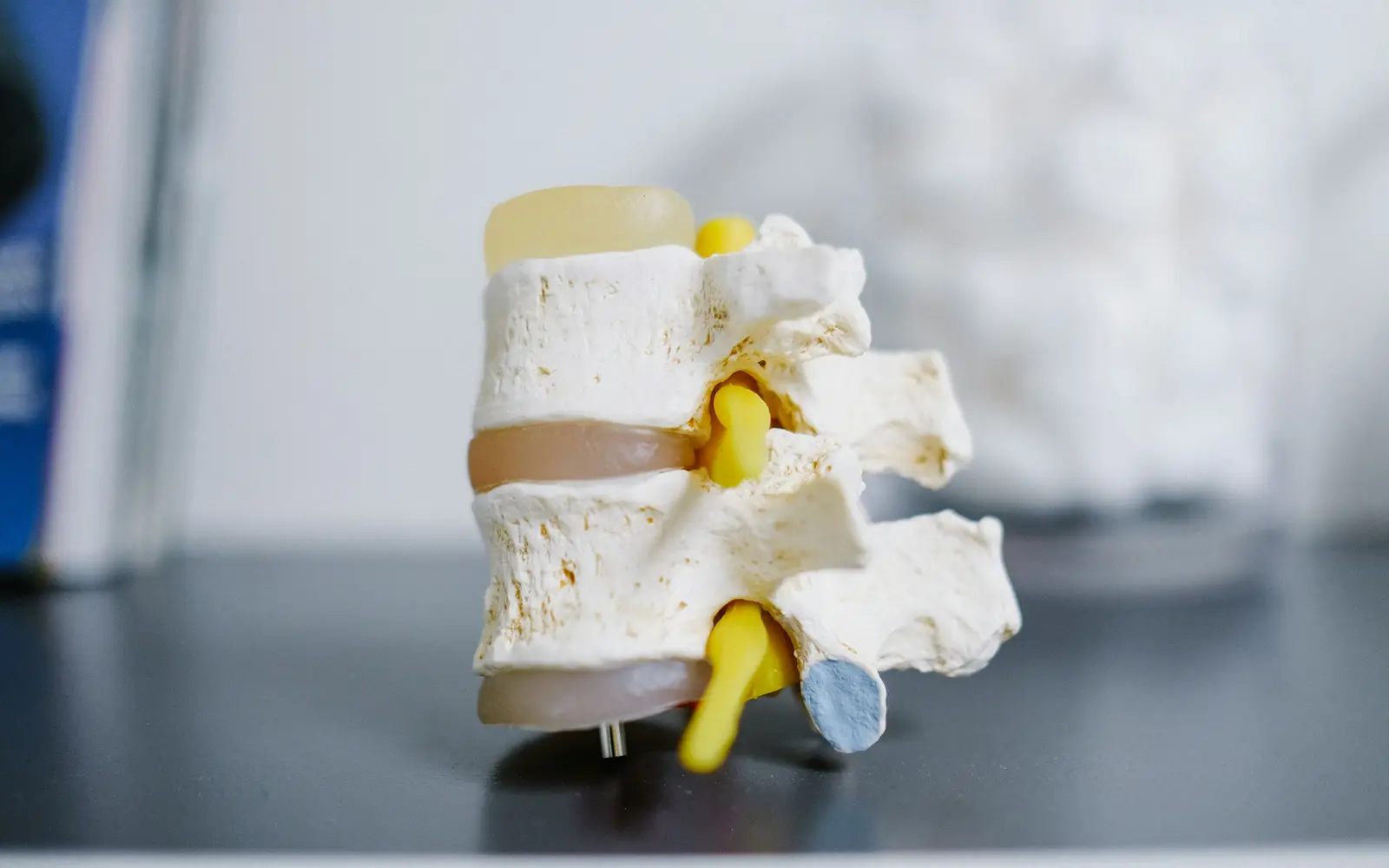
The word describes a sideways curve of the spine, usually with some twisting of the vertebrae (the bones of the spine) as well. It is the twisting that pushes the ribs backward on one side and creates the hump that shows when a person bends forward. Many curves are small and never need treatment. Some grow over time and begin to affect posture, comfort, and in severe cases the space available for the lungs.
Scoliosis correction is surgery that straightens the curve as far as is safely possible and holds it there with screws and rods while the vertebrae fuse (heal together into solid bone). It is a major operation, planned carefully with several tests beforehand, and because it is rarely urgent, there is usually time to ask questions, get opinions and compare options before deciding. You can name a preferred country or let hospitals in several countries quote; each partner hospital reviews the X-rays and quotes, and you choose.
Who needs it
Teenagers
The most common type is adolescent idiopathic scoliosis, meaning a curve that appears around puberty without a known cause. It is more common in girls. Treatment depends on the size of the curve, measured on X-ray as the Cobb angle, and on how much growing the child still has to do.
- Smaller curves are usually watched with X-rays every few months.
- Moderate curves in a child who is still growing are often treated with a brace, worn many hours a day, to stop the curve getting worse.
- Surgery is usually discussed when the curve reaches about 45 to 50 degrees, or keeps increasing despite a brace. Curves of this size tend to keep growing slowly even in adult life.
For some younger children with growth remaining, a few surgeons offer a newer technique called vertebral body tethering, which uses a flexible cord instead of a full fusion. It is suitable only for selected curves, and not every hospital offers it.
Adults
Adults come to scoliosis surgery in two ways. Some have had a curve since their teenage years that has slowly worsened. Others develop degenerative scoliosis later in life, when discs and joints wear unevenly and the spine starts to bend. For adults, the reason for surgery is usually not the angle itself but the symptoms: back pain that limits daily life, leg pain from nerves pinched in a narrowed canal (spinal stenosis), or loss of balance, where a person leans forward or to one side and cannot stand upright without effort.
There are also less common types, such as congenital scoliosis (from vertebrae that formed unusually before birth) and neuromuscular scoliosis (linked to conditions such as cerebral palsy or muscular dystrophy). These need specialist assessment, and the surgeon will want the full medical history.
Reports and tests
- Full length standing X-rays of the whole spine, front view and side view, including the hips. These are the most important images. Films taken lying down can make the curve look smaller than it is.
- Side bending X-rays, taken while bending left and right, to show how flexible the curve is.
- MRI of the whole spine, to check the spinal cord and rule out other causes, especially when the curve is unusual or there are nerve symptoms.
- Lung function tests for larger curves in the chest region.
- For adults, a bone density scan (DEXA), a CT scan if available, and heart and blood tests depending on age and health.
- For teenagers, information that shows remaining growth, such as the age periods started in girls, and the Risser grade (a measure of bone maturity seen on the pelvis X-ray).
How it is done
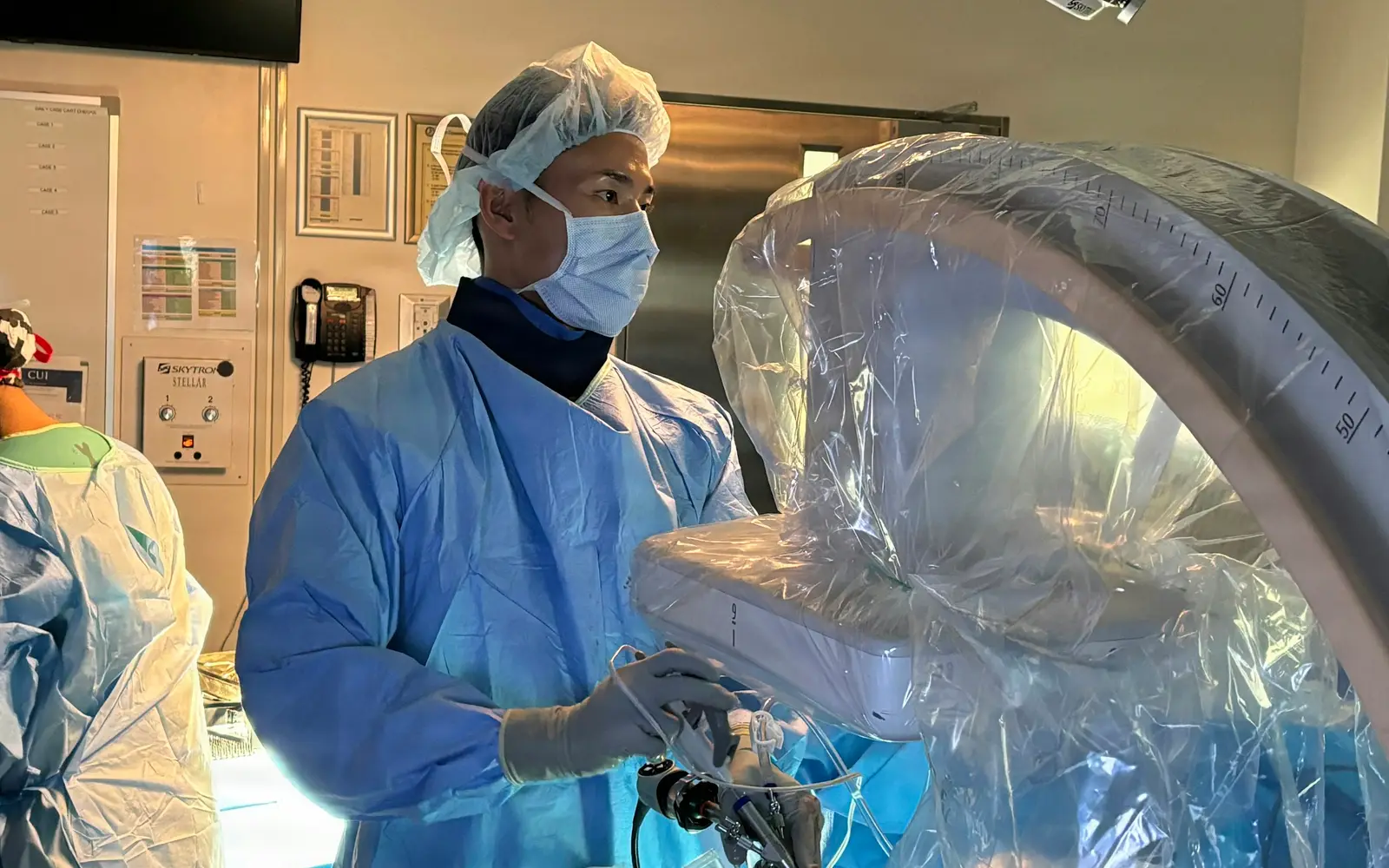
Most scoliosis corrections today are done from the back, as a posterior spinal fusion. You are under general anaesthesia, lying face down. The surgeon makes a cut along the middle of the back, places screws into the vertebrae across the curve, then uses two rods to gradually derotate and straighten the spine. Bone graft is laid over the prepared bone so that the segments fuse into one solid column over the following months. The operation usually takes four to six hours, sometimes more for large or stiff curves.
Neuromonitoring is standard in this surgery. Electrodes on the skin and scalp track the signals travelling through the spinal cord to the legs throughout the operation, and warn the team immediately if the correction is affecting the cord.
Adult surgery often adds steps. The surgeon may remove bone and ligament to free pinched nerves, place cages in the disc spaces to restore height, or perform an osteotomy (a controlled cut through bone) to correct a stiff curve. The fusion sometimes extends down to the pelvis. A very large correction may be split into two operations a few days apart.
Because blood loss can be significant, hospitals use medicines that reduce bleeding and often a cell saver, a machine that collects your own blood during surgery and returns it to you.
Recovery and how long you stay
The first night is often spent in an intensive care or high dependency unit for close monitoring. Pain is controlled with medicine through a drip or a pump you press yourself. Physiotherapists help you sit up and stand on the first or second day, and walking increases daily.
Teenagers usually stay in hospital for 5 to 7 days. Adults often need 7 to 10 days, sometimes longer after a two stage operation.
Most families should plan for 3 to 4 weeks in the country of treatment for a teenager, and 4 to 5 weeks for an adult. This covers tests before surgery, the hospital stay, wound review, removal of stitches if needed, and a check X-ray before the surgeon clears the flight home. For a long flight, surgeons usually suggest walking the aisle regularly, and a small cushion can support the back.
Teenagers usually return to school within about a month to six weeks, and to most sport within six months to a year, as the surgeon advises. Adults recover more slowly, and full benefit can take a year or longer.
MediCurage coordinates travel and the stay; the hospital does the surgery. We request the visa invitation letter, check it against every passport, and help each attendant apply. Attendant rules differ by country; if you are treated in India, up to two attendants can travel with the patient (three for Bangladeshi nationals on the regular medical visa), so both parents can usually be with a teenager, and we look for a stay with a lift, because stairs are hard in the first weeks after a long fusion.
Questions to ask your surgeon
- What is the Cobb angle of each curve, and how flexible are they on the bending X-rays?
- Which vertebrae will you fuse, and why stop at those levels?
- How much straightening do you expect, and what will the back look like afterwards?
- How will you manage blood loss, and is a transfusion likely?
- How long before school, work, sport and lifting are allowed?
- When can we fly home, and what follow up X-rays will you want, and when?
If the patient is a teenager, let them ask some of these questions themselves. They are the one living with the result, and a young person who knows why each step matters often finds the weeks of exercises and restrictions easier to stick with.
Indicative cost by country
Ranges for a standard case at a private hospital. They help you plan; your chosen hospital's quote for your case is the figure to plan around.
- IndiaIndicative priceUS$8,000 to US$16,000Hospital stay5 to 10 daysTotal time in the country21 to 35 days
What the range usually covers: Posterior correction and fusion with rods and screws, spinal cord monitoring during surgery, and ICU and ward stay for the listed days. Severe or adult curves cost more. Excludes flights and hotel.
- TurkeyIndicative priceUS$15,000 to US$30,000Hospital stay5 to 10 daysTotal time in the country21 to 35 days
What the range usually covers: Posterior correction and fusion with rods and screws, spinal cord monitoring during surgery, and ICU and ward stay for the listed days. Severe or adult curves cost more. Excludes flights and hotel.
- ThailandIndicative priceUS$15,000 to US$35,000Hospital stay5 to 10 daysTotal time in the country21 to 35 days
What the range usually covers: Posterior correction and fusion with rods and screws, spinal cord monitoring during surgery, and ICU and ward stay for the listed days. Severe or adult curves cost more. Excludes flights and hotel.
- MalaysiaIndicative priceUS$15,000 to US$25,000Hospital stay5 to 10 daysTotal time in the country21 to 35 days
What the range usually covers: Posterior correction and fusion with rods and screws, spinal cord monitoring during surgery, and ICU and ward stay for the listed days. Severe or adult curves cost more. Excludes flights and hotel.
- MexicoIndicative priceUS$24,500 to US$55,000Hospital stay5 to 10 daysTotal time in the country21 to 35 days
What the range usually covers: Posterior correction and fusion with rods and screws, spinal cord monitoring during surgery, and ICU and ward stay for the listed days. Severe or adult curves cost more. Excludes flights and hotel.
Indicative range. Your final cost depends on your reports and the hospital you choose.
Questions families ask
At what curve size is scoliosis surgery usually advised?
For teenagers, surgeons usually discuss surgery when the curve reaches about 45 to 50 degrees, or keeps growing despite a brace. For adults, the decision depends more on pain, nerve symptoms and balance than on the angle alone. Your surgeon measures the curve on standing X-rays.
Will my child grow normally after scoliosis surgery?
The fused part of the spine stops growing, so surgeons usually prefer to operate when most spinal growth is complete. In younger children with a lot of growth left, they may suggest a brace, growing rods or other approaches first. Ask the surgeon how much growth your child has left.
Will my child need a blood transfusion?
Scoliosis surgery can involve significant blood loss. Hospitals use measures such as medicines that reduce bleeding and machines that collect and return your own blood, but a transfusion is sometimes still needed. Ask the hospital what they do and whether family members should be ready to donate.
When can a teenager go back to school after scoliosis surgery?
Many teenagers return to school within about four to six weeks, at first for shorter days. Heavy school bags, contact sports and gym usually wait several months. The surgeon gives a timeline based on the fusion.
Is scoliosis surgery in adults different from surgery in teenagers?
Yes. Adults often have stiffer curves, worn discs, narrowed nerve canals and weaker bone, so the operation may be longer, include decompression of nerves, and sometimes extend to the pelvis or be done in two stages. Recovery and the stay abroad are usually longer as well.
This page is general information. Your treating doctor decides your treatment plan.