Overview
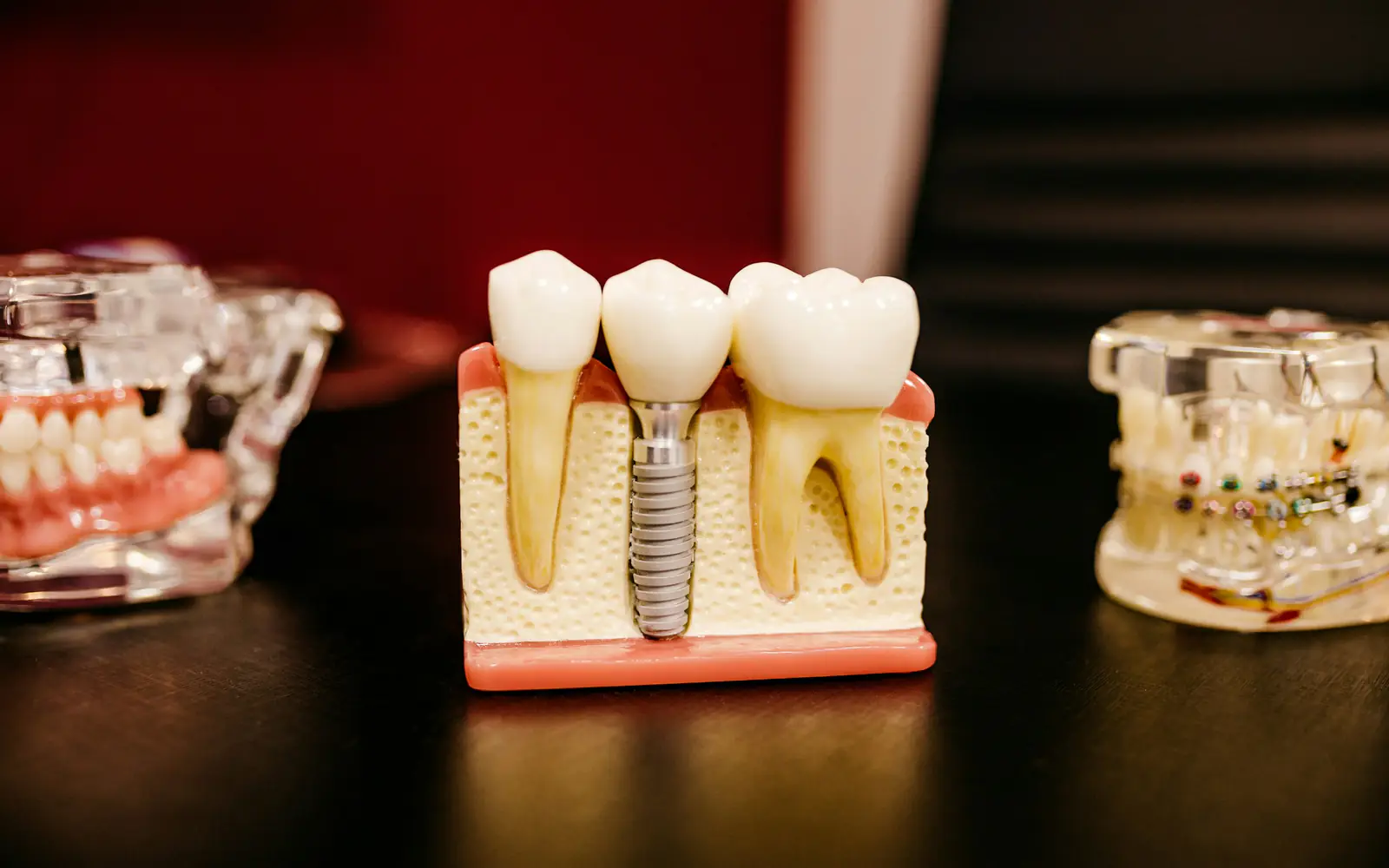
Losing a tooth means losing its root as well, and the root is what a dental implant replaces. The implant is a small screw, usually made of titanium, that a dentist places into the jawbone. Over the following months the bone grows tightly against its surface, a process called osseointegration. Once that has happened, the implant can carry a crown (an artificial tooth), a bridge (several teeth joined together) or a full set of teeth for one jaw.
Unlike a removable denture, implant teeth are fixed in place and do not rest on the gums. Unlike a traditional bridge, a single implant does not need the healthy teeth on either side to be filed down.
Implant treatment is a process with stages. There is surgery, a healing period of several months, and then the final teeth. That is why people travelling for implants usually plan two trips. Dental work is a common reason to travel to Mexico and Turkey, and clinics in the other destinations also offer it.
Who needs it
Implants are considered when one or more teeth are missing, or when teeth are so damaged by decay, cracks or gum disease that they need to come out. People who struggle with loose dentures often ask about implants too.
The dentist will look at:
- Bone. There must be enough bone in height and width to hold the implant. After a tooth is lost, the bone around it slowly shrinks.
- Gums. Active gum disease (periodontitis, an infection that destroys the bone around teeth) must be treated first, or it can attack the implants as well.
- General health. Poorly controlled diabetes slows healing. Smoking raises the risk of an implant failing.
- Medicines. Some osteoporosis medicines, called bisphosphonates, and some cancer treatments affect how the jawbone heals. Radiotherapy to the head and neck matters too. Tell the dentist about all of these.
- Age. The jaw must have stopped growing, so implants are for adults.
For a quote, the dentist usually asks for a panoramic X-ray (OPG, a single wide picture of both jaws) and, for larger work, a CBCT scan (a low-dose 3D X-ray of the jaw). If you do not have a CBCT, the clinic will take one on arrival, and the plan may change once they see it.
How it is done
Implants are placed under local anaesthesia, the same numbing injection used for a filling. Some clinics offer sedation for longer sessions. Placing one implant usually takes under an hour. A full arch can take several hours.
A single implant
The dentist opens the gum, prepares a small channel in the bone and places the implant. The gum is closed over it, or a small healing cap is left showing. After healing, an abutment (a short connector) is fitted, and the crown is made to match your other teeth.
Bridges on implants
When several teeth in a row are missing, two or three implants can support a bridge of three or four teeth. This means fewer implants than one per tooth.
Full arch, All-on-4 style
For a jaw with no teeth, or with teeth that all need to come out, the dentist can fix a complete arch of teeth on four implants. The back implants are angled to avoid the sinus in the upper jaw and the main nerve in the lower jaw, which often avoids the need for bone grafting. Some dentists use five or six implants instead, depending on the bone. Failing teeth are removed and the implants placed in the same session. A fixed temporary bridge is often fitted within a day or two.
There is also a removable option, an overdenture, which clips onto two to four implants and comes out for cleaning.
Bone grafting
If bone is thin, the dentist can add bone graft material, either from your own body or from a prepared source. A sinus lift raises the floor of the sinus to make room for bone above the upper back teeth. Some grafts are done at the same time as the implant. Larger ones need to heal for several months first, which can mean an extra trip.
Why it takes two trips
The first trip covers the consultation, scans, any extractions and placing the implants. You then go home for about three to six months while the bone fuses with the implants. The upper jaw often takes a little longer than the lower. The second trip is for taking impressions or digital scans, trying in the final teeth and fitting them, with time for adjustments.
Recovery and how long you stay
The procedure is day care, so you go back to your hotel the same day. Expect swelling and some bruising for a few days, often at its worst on the second or third day. Painkillers and cold packs help. Dentists usually advise soft food, careful brushing around the area and salt water rinses, and they may prescribe antibiotics.
For the first trip, plan about 5 to 7 days. That allows for the scan and planning, surgery, and a check a few days later before you fly. A single implant may need less time, and a full arch with extractions sits at the longer end. Flying is usually fine once the dentist has checked the wound, though people who have had a sinus lift are often asked to wait longer, because pressure changes can affect healing.
The second trip is usually 5 to 10 days, depending on how many teeth are being made. MediCurage asks each clinic to write down the number of implants, the implant system and the material of the final teeth, so you can compare quotes properly, and your coordinator books both trips around the healing time your dentist sets.
At home, implants need the same care as teeth, plus cleaning under bridges with special brushes or a water flosser. Peri-implantitis, an infection of the gum and bone around an implant, is the main long-term risk. Regular check-ups with a local dentist help catch it early, so take your treatment records home with you.
Questions to ask your dentist
- How many implants do you plan, and why that number?
- Which implant system will you use, and can a dentist in my country get parts for it later?
- Do I need bone grafting or a sinus lift, and how does that change the timeline?
- What will the temporary teeth be, and what can I eat with them?
- What material will the final crowns or bridge be made of?
- What does the quote include, such as scans, extractions, temporary teeth and the second visit?
- If an implant does not fuse, what happens and who pays?
- What records will I take home for my local dentist?
Ask for the treatment plan as a tooth chart, with the position of each implant marked. It makes the second trip easier, and it gives any dentist who sees you later a precise picture of what is in your mouth.
Indicative cost by country
Ranges for a standard case at a private hospital. They help you plan; your chosen hospital's quote for your case is the figure to plan around.
- IndiaIndicative priceUS$400 to US$800Hospital stayDay care, no overnight stayTotal time in the country5 to 7 days
What the range usually covers: Price per single implant with abutment and crown, placed over two visits. Bone grafting, sinus lift and full mouth plans are quoted separately. Excludes flights and hotel.
- TurkeyIndicative priceUS$600 to US$1,400Hospital stayDay care, no overnight stayTotal time in the country5 to 7 days
What the range usually covers: Price per single implant with abutment and crown, placed over two visits. Bone grafting, sinus lift and full mouth plans are quoted separately. Excludes flights and hotel.
- ThailandIndicative priceUS$1,400 to US$2,500Hospital stayDay care, no overnight stayTotal time in the country5 to 7 days
What the range usually covers: Price per single implant with abutment and crown, placed over two visits. Bone grafting, sinus lift and full mouth plans are quoted separately. Excludes flights and hotel.
- MalaysiaIndicative priceUS$1,000 to US$2,500Hospital stayDay care, no overnight stayTotal time in the country5 to 7 days
What the range usually covers: Price per single implant with abutment and crown, placed over two visits. Bone grafting, sinus lift and full mouth plans are quoted separately. Excludes flights and hotel.
- MexicoIndicative priceUS$1,000 to US$2,000Hospital stayDay care, no overnight stayTotal time in the country5 to 7 days
What the range usually covers: Price per single implant with abutment and crown, placed over two visits. Bone grafting, sinus lift and full mouth plans are quoted separately. Excludes flights and hotel.
Indicative range. Your final cost depends on your reports and the hospital you choose.
Questions families ask
Why do dental implants usually need two trips?
After an implant is placed, the jawbone needs about three to six months to grow tightly around it before it can carry a permanent crown or bridge. You go home with a temporary solution in between. The second trip, often around a week, is for fitting and adjusting the final teeth.
Will I have teeth while the implants heal?
Usually, yes. With a full arch, many dentists fix a temporary bridge within a day or two of surgery. For single teeth, you may get a temporary crown or a removable plate. The temporary teeth are meant for soft food, not hard chewing.
Do I need a bone graft?
Only if there is not enough bone to hold the implant firmly. A 3D scan of your jaw (a CBCT scan) shows this. A graft can add several months before the implant is placed or loaded, and sometimes an extra trip.
Which records should I send for a dental implant quote?
Send a recent panoramic X-ray (OPG) or a CBCT scan if you have one, clear photos of your teeth, and a note of which teeth are missing or failing. Mention any medical conditions, smoking, and medicines for osteoporosis or blood thinning. Quotes for full arch work depend heavily on the scan.
How long do dental implants last?
Implants that heal well can last many years, but the crowns and bridges on top wear and may need replacing over time. Daily cleaning, regular check-ups and not smoking all help. Gum infection around an implant can cause it to fail, so follow-up matters.
This page is general information. Your treating doctor decides your treatment plan.