Overview
If you are reading this for your son or daughter, you have probably heard a doctor say there is a "hole in the heart". Those words are hard to hear. Many of these holes can be closed, often by a procedure through a vein, and many children who have them repaired grow up to lead active lives, with regular check-ups along the way.
Congenital heart disease means a heart problem a child is born with. The most common are holes in the walls that divide the heart's chambers:
- ASD (atrial septal defect): a hole between the two upper chambers.
- VSD (ventricular septal defect): a hole between the two lower chambers.
- PDA (patent ductus arteriosus): a blood vessel that should close after birth but stays open.
These let extra blood flow into the lungs. Over time, this can strain the heart and raise the pressure in the lungs. Other conditions repaired in childhood include tetralogy of Fallot, a combination of four problems that can make a child look blue, and coarctation, a narrowing of the main artery leaving the heart.
Who needs it
Not every hole needs closing. Small VSDs and some small ASDs close on their own in the first years of life, and the cardiologist may simply watch them with regular scans. Closure is usually advised when:
- the child breathes fast, sweats while feeding, tires easily or gains weight slowly
- there are frequent chest infections
- the echocardiogram shows the heart is enlarged or working too hard
- the lung pressure is rising
- the defect is a type that will not close by itself
Timing matters. If a large hole is left too long, the blood vessels in the lungs can be damaged in a way that cannot be reversed, and closure may no longer be safe. That is why we ask for your child's most recent echocardiogram, an ultrasound scan of the heart, with the first message. Paediatric cardiologists review it, and several partner hospitals then quote for the treatment they would recommend. You can name the country you would prefer, or ask hospitals in more than one country to quote. You compare and choose.
How it is done
There are two main ways to close a defect. Which one suits your child depends on the type of hole, its size and position, and the child's weight.
Device closure through a catheter
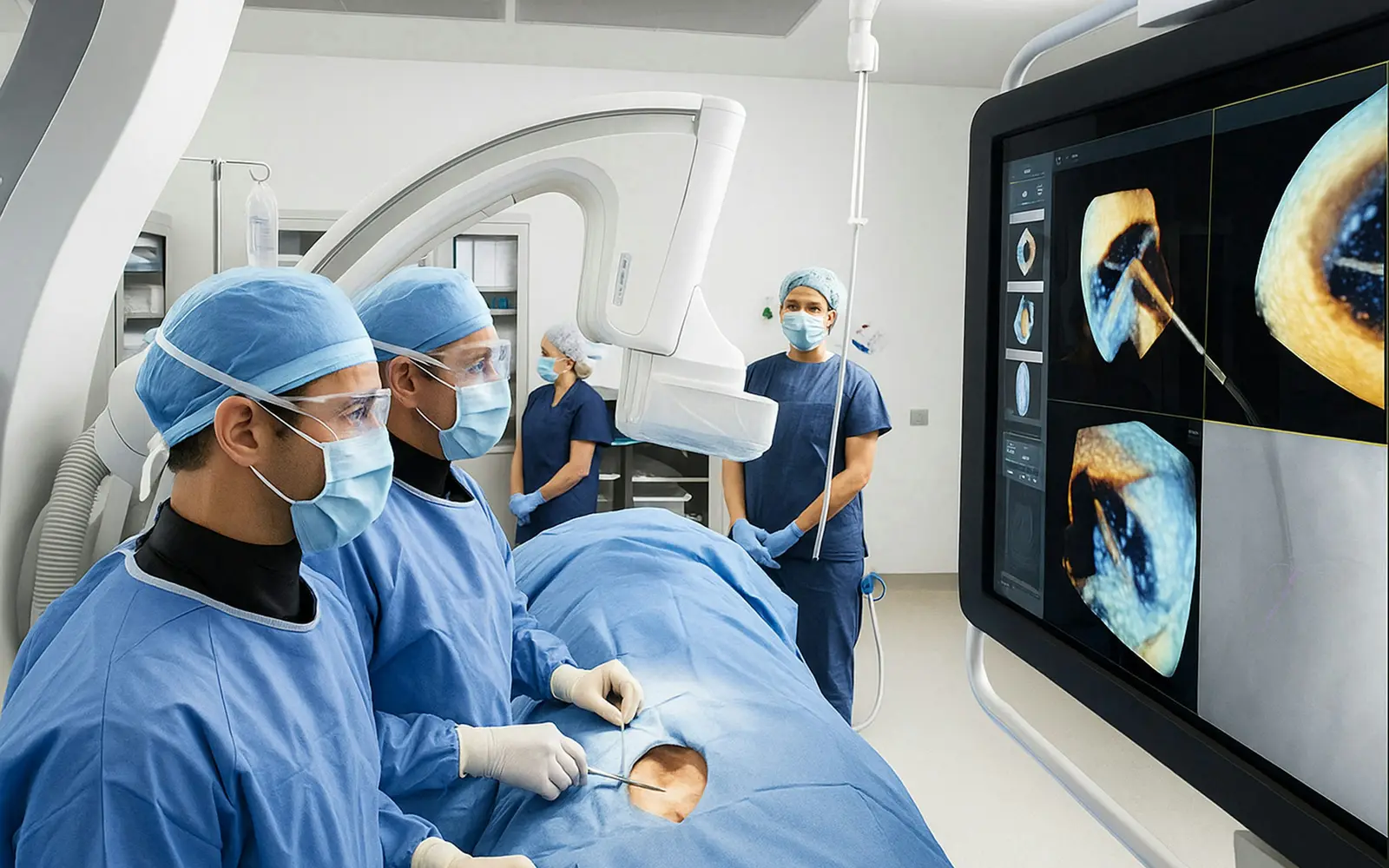
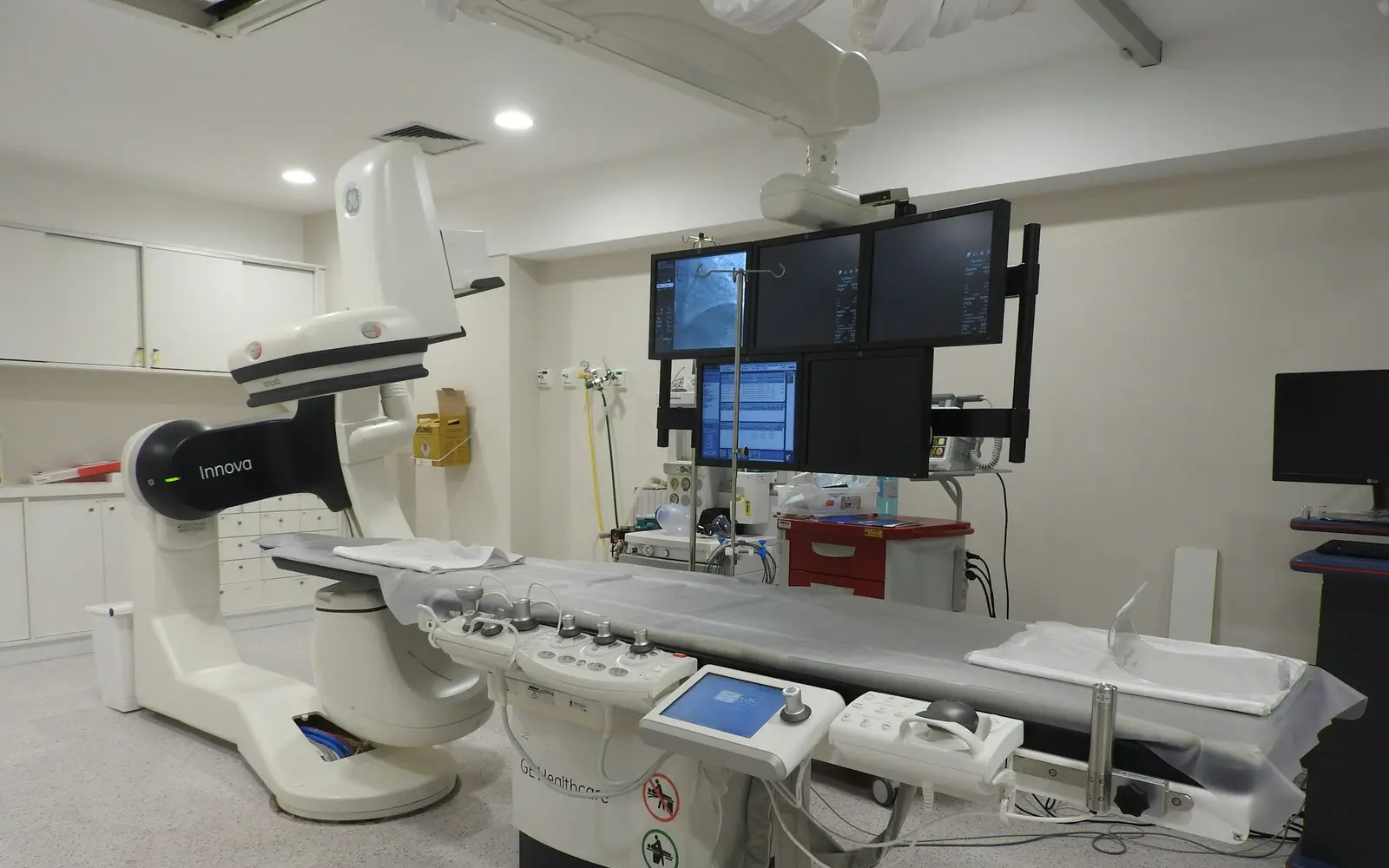
Many ASDs and PDAs, and some VSDs, can be closed without opening the chest. Under general anaesthesia, the cardiologist passes a thin tube through a vein at the top of the leg up to the heart. Guided by X-ray and ultrasound, they place a small folding device that opens on both sides of the hole like a double umbrella and plugs it. Heart tissue grows over the device in the months that follow. The procedure usually takes one to two hours. Most children go home within one to two days.
Open heart surgery
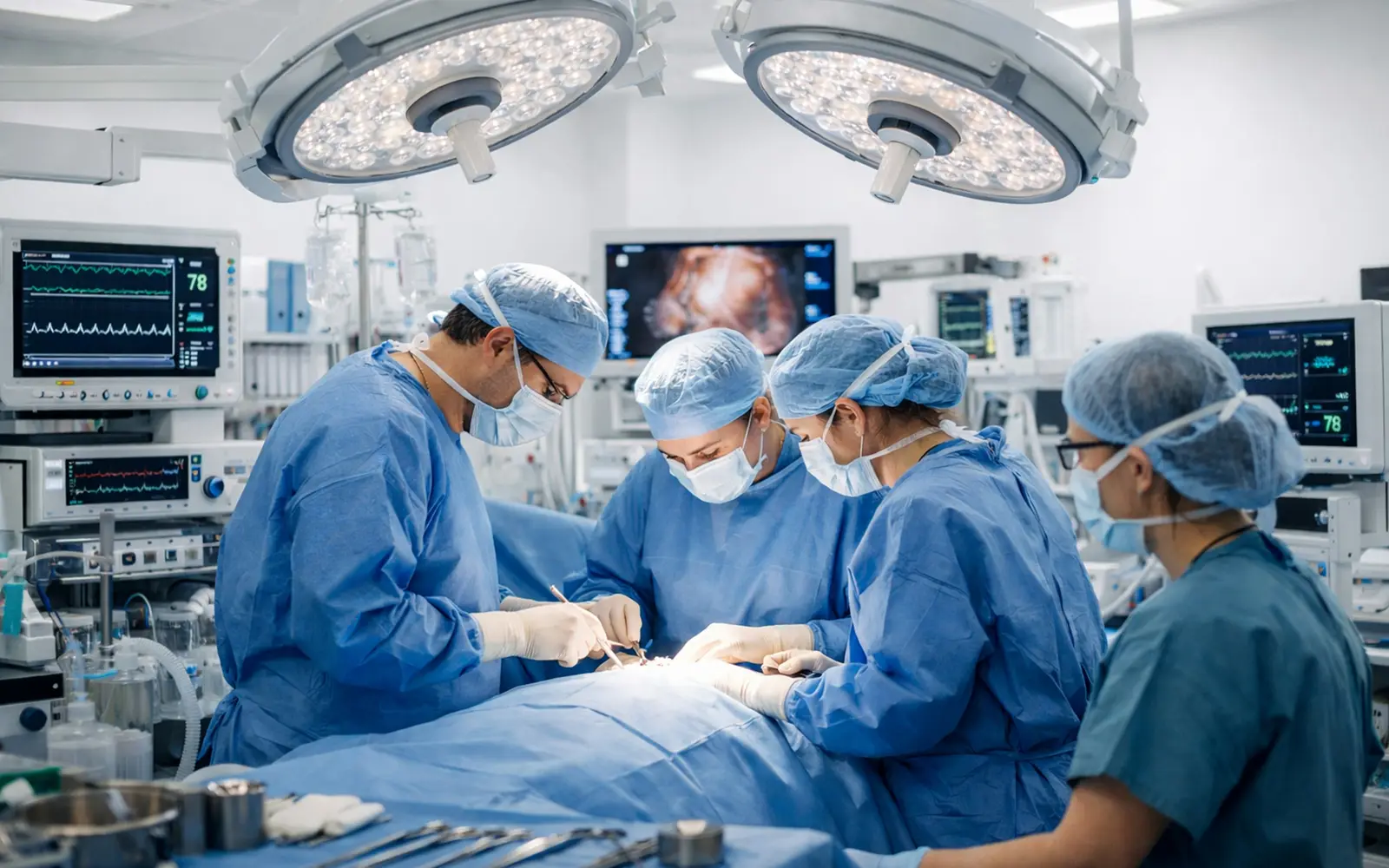
Larger holes, holes in difficult positions, and more complex repairs such as tetralogy of Fallot need surgery. The surgeon opens the chest, usually through the breastbone, and a heart-lung machine takes over the circulation while the heart is stopped. The hole is closed with stitches or a patch. These operations commonly take three to five hours, and the surgeon will give you a clearer estimate.
Before either procedure
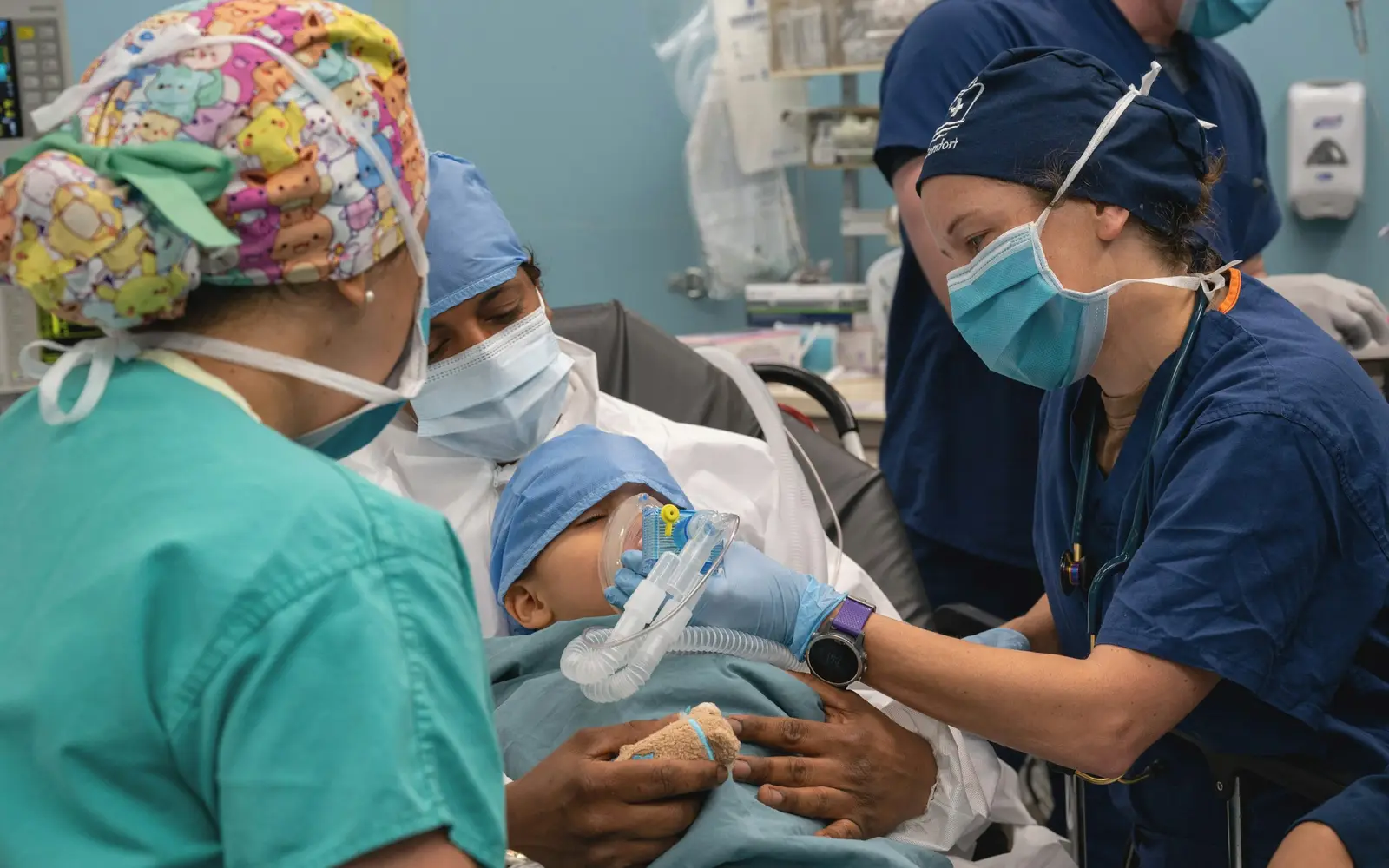
Expect one or two days of checks after arrival. These include an echocardiogram, an ECG (a tracing of the heart's electrical activity), a chest X-ray, blood tests, the child's weight and height, and a check for any infection. Some children also need a CT or MRI scan, or a cardiac catheterisation to measure the pressure in the lungs. An anaesthetist will meet you to explain how your child will be put to sleep and when they must stop eating and drinking.
Recovery and how long you stay
After device closure, your child usually spends the night on the ward with a parent. They may need to lie still for a few hours to protect the groin puncture. An echocardiogram the next day checks the device position. Children are often given aspirin for about six months while the device heals in, and antibiotics before dental treatment during that time. Plan for about 10 days in total in the country where you are treated.
After open surgery, your child goes to the paediatric intensive care unit (PICU). For the first day or two you will see a breathing tube, drips, chest drains and many monitors. Parents can usually visit the PICU, though each hospital sets its own times. The breathing tube often comes out within the first day. Most children move to the ward after one to three days and leave hospital about seven to ten days after the operation. Plan for about three weeks in the destination country, so the surgeon can check the wound and repeat the echocardiogram before clearing your child to fly.
For about six weeks after chest surgery, surgeons usually advise lifting your child with a hand under the bottom and behind the back, not under the arms. Your child's own surgeon will give you the exact limits. Expect tiredness and some poor appetite at first. Many children are playing again before their parents are ready for it.
MediCurage coordinates and the hospital team treats your child. When the PICU lets only one parent stay overnight, the other needs a room a short walk or drive away, and that is the first thing we look for when we book your stay.
Questions to ask your surgeon
- Exactly which defect does my child have, and can it be closed with a device?
- Why is now the right time, and what happens if we wait?
- What will the PICU stay involve, and when can I be with my child?
- Will my child need medicines after going home, and for how long?
- Is a second operation or procedure likely as my child grows?
- How often will my child need echocardiograms at home, and who can do them?
Before you leave, ask for a short letter for your child's school or nursery that says what was done and when running games and sport can start again. Teachers tend to follow a doctor's note more readily than a parent's description, and it saves your child being kept out of play for longer than needed.
Indicative cost by country
Ranges for a standard case at a private hospital. They help you plan; your chosen hospital's quote for your case is the figure to plan around.
- IndiaIndicative priceUS$4,500 to US$10,000Hospital stay2 to 10 daysTotal time in the country10 to 25 days
What the range usually covers: Corrective surgery or catheter closure for common defects such as ASD, VSD or tetralogy of Fallot, with paediatric ICU and ward stay. Complex or staged repairs cost more. Excludes flights and hotel.
- TurkeyIndicative priceUS$8,000 to US$18,000Hospital stay2 to 10 daysTotal time in the country10 to 25 days
What the range usually covers: Corrective surgery or catheter closure for common defects such as ASD, VSD or tetralogy of Fallot, with paediatric ICU and ward stay. Complex or staged repairs cost more. Excludes flights and hotel.
- ThailandIndicative priceUS$18,000 to US$35,000Hospital stay2 to 10 daysTotal time in the country10 to 25 days
What the range usually covers: Corrective surgery or catheter closure for common defects such as ASD, VSD or tetralogy of Fallot, with paediatric ICU and ward stay. Complex or staged repairs cost more. Excludes flights and hotel.
- MalaysiaIndicative priceUS$16,500 to US$20,000Hospital stay2 to 10 daysTotal time in the country10 to 25 days
What the range usually covers: Corrective surgery or catheter closure for common defects such as ASD, VSD or tetralogy of Fallot, with paediatric ICU and ward stay. Complex or staged repairs cost more. Excludes flights and hotel.
- MexicoIndicative pricePrice on requestHospital stay2 to 10 daysTotal time in the country10 to 25 days
What the range usually covers: Corrective surgery or catheter closure for common defects such as ASD, VSD or tetralogy of Fallot, with paediatric ICU and ward stay. Complex or staged repairs cost more. Excludes flights and hotel.
Indicative range. Your final cost depends on your reports and the hospital you choose.
Questions families ask
Can both parents travel with the child?
Yes, in most cases both parents can come, though the number of attendants allowed and the visa rules differ by destination and sometimes by nationality. We check the rules for the country you choose, request the hospital's invitation letter where one is needed, and help each parent prepare their own visa application. Ask the hospital how many parents may stay overnight on the children's ward, as rules differ.
Will my child have a scar?
After device closure through a catheter, there is only a small puncture mark in the groin that usually fades. Open surgery leaves a scar down the middle of the chest, or in some cases on the side of the chest. Scars tend to become paler and flatter as the child grows.
My child has a cold. Should we delay the trip?
Tell the coordinator straight away and send a note from your child's doctor. A chest infection, fever or diarrhoea can lead the team to postpone surgery until the child is well, because infection makes recovery harder. A mild runny nose may not matter, and the surgeon will decide.
Can my child go back to school and play normally?
After device closure, most children return to school within a week or so, with a short break from rough sports. After open surgery, school usually waits about four to six weeks while the breastbone heals. Many children with a repaired simple defect go on to play and grow like other children, though each child needs follow-up checks.
Does my child need vaccinations before or after surgery?
Bring your child's vaccination record. The team may want routine vaccines up to date before surgery, and may advise a gap between some vaccines and the operation. Follow their advice, then keep to the usual schedule at home.
What should we pack for a young child?
Pack familiar things, such as a favourite toy or blanket, the bottles or cups they use, and enough of any regular medicines. Loose clothes that button at the front are easier after chest surgery. Formula milk and nappies are usually easy to buy near the hospital, but bring a supply of a specific brand if your child is used to it.
This page is general information. Your treating doctor decides your treatment plan.