Overview
Stomach cancer, also called gastric cancer, usually begins in the cells that line the inside of the stomach. It often grows for some time with vague symptoms, such as indigestion, early fullness, weight loss or anaemia, so many people are diagnosed once the tumour is already of moderate size. That shapes how it is treated.
For cancer that has not spread beyond the stomach and nearby lymph nodes, the main treatment is an operation called a gastrectomy, which removes part or all of the stomach along with the lymph nodes around it. Lymph nodes are small glands that filter fluid from the tissues and are often the first place cancer reaches. For many tumours beyond the earliest stage, chemotherapy is given both before and after the operation. This is called perioperative chemotherapy.
Living without part or all of your stomach takes adjustment. Eating changes, and some vitamins must be replaced. A good part of this page is about that, because it is often the part people know least about before they travel. The hospital's tumour board, a meeting of cancer specialists who review each case together, decides the treatment. We arrange the accommodation, the interpreter for each consultation and a coordinator who keeps track of every appointment.
Who needs it
Diagnosis starts with an upper endoscopy, sometimes called a gastroscopy. A thin flexible camera is passed through the mouth into the stomach, usually under sedation, and biopsies (small tissue samples) are taken. The pathologist confirms the cancer type and runs further tests on the same tissue.
Broadly, treatment follows the stage:
- Very early cancer confined to the inner lining can sometimes be removed through the endoscope itself, without opening the abdomen. Only some centres do this, and only for carefully selected tumours.
- Early cancer that has grown a little deeper may be treated with surgery alone.
- Locally advanced cancer, deeper into the wall or with affected lymph nodes, is usually treated with chemotherapy, then surgery, then more chemotherapy.
- Cancer that has spread to the liver, the lining of the abdomen or distant nodes is treated mainly with drugs, chosen partly on the results of tumour tests.
Tumours at the junction where the food pipe meets the stomach are a special group, and the operation may involve part of the food pipe as well.
For a quote, hospitals usually ask for the endoscopy and biopsy reports, the CT scan images and report, blood counts and any treatment already given. You can name a preferred country on the quote form, or let hospitals in several countries quote for the same plan.
How it is done
Staging tests
- CT scan of the chest, abdomen and pelvis.
- Endoscopic ultrasound, an endoscopy with an ultrasound probe on the tip, which shows how deep the tumour has grown and whether nearby nodes are enlarged.
- Staging laparoscopy, a keyhole look inside the abdomen under general anaesthetic, to find small deposits that scans miss. Fluid rinsed from the abdomen may be checked for cancer cells.
- PET-CT in some cases.
- Tumour tests, including HER2, PD-L1 and mismatch repair (MMR) status. These matter most if the cancer has spread, because they guide the choice of targeted drugs or immunotherapy (drugs that help the immune system attack cancer).
Chemotherapy before and after surgery
A common regimen for fit patients is FLOT, a combination of four drugs given through a drip every two weeks. A typical plan is four cycles before surgery, the operation a few weeks after the last cycle, then four more cycles once you have recovered. Each cycle needs a blood test first. Other regimens are used when FLOT is not suitable, and the oncologist explains which one applies to you.
The operation
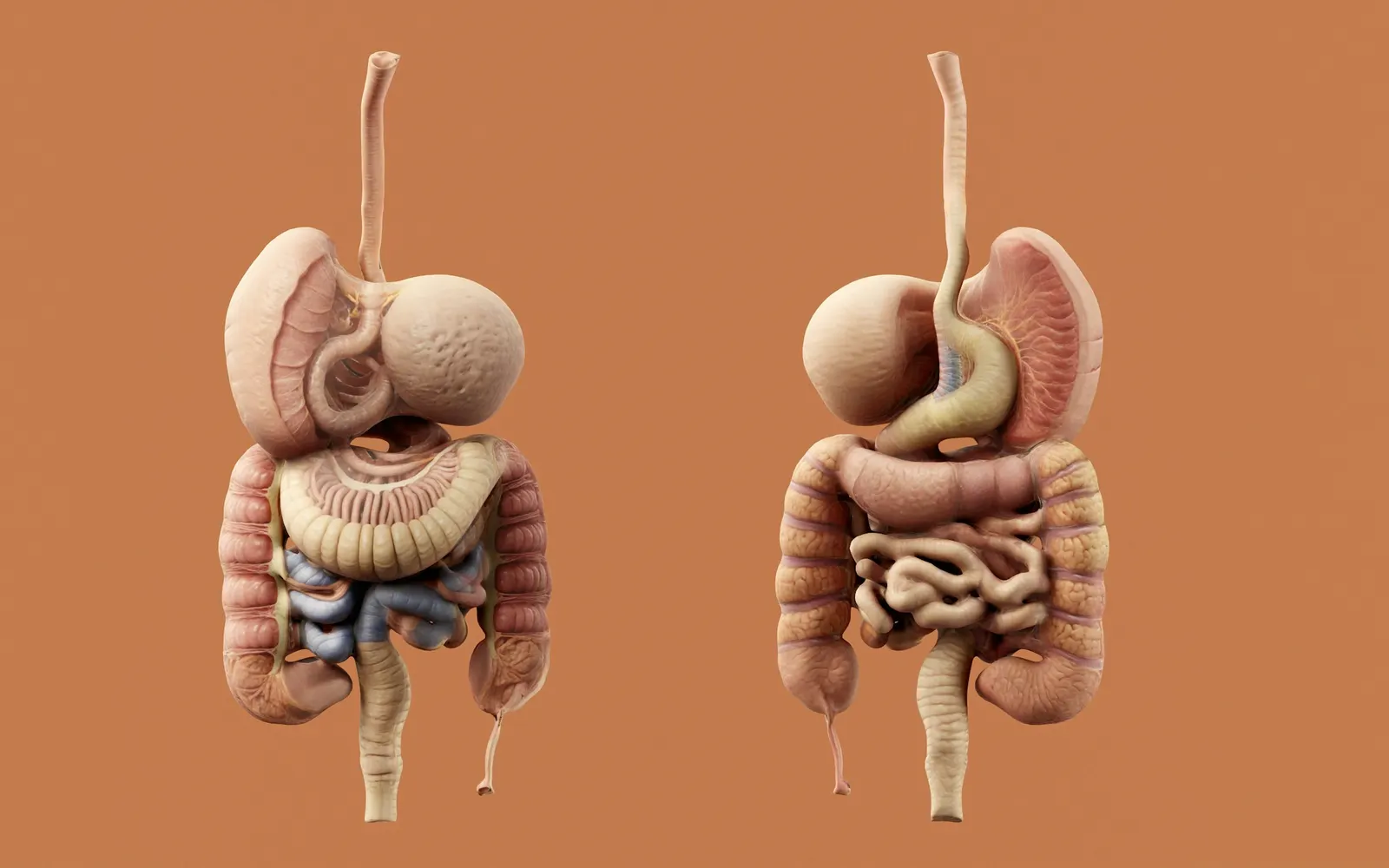
A subtotal (partial) gastrectomy removes the lower part of the stomach and is used when the tumour sits in that area. A total gastrectomy removes the whole stomach, and the surgeon joins the food pipe to a loop of small bowel. In both, a D2 lymph node dissection is the standard in many centres. This means removing the lymph nodes next to the stomach and those along the main arteries that supply it, so the pathologist can stage the cancer accurately and fewer cancer cells are left behind.
Gastrectomy can be done open, through one cut in the upper abdomen, or by laparoscopy (keyhole surgery). Some hospitals offer robotic surgery. Not every hospital offers keyhole or robotic gastrectomy for cancer, and the surgeon will advise which approach suits the tumour.
Recovery and how long you stay
You will usually start sips of fluid within a day or two, then move slowly to soft food over the following days. The team watches for leakage from the new join, chest infection and blood clots, and asks you to walk from the first day. Most patients leave hospital after seven to twelve days.
Eating afterwards is different. Little and often is the rule: six to eight small meals a day, eaten slowly, with drinks taken between meals rather than with them. Some people get dumping syndrome, where food passes too quickly into the bowel and causes sweating, cramps, dizziness or diarrhoea soon after eating, or a drop in blood sugar an hour or two later. A dietitian will help you adjust what and when you eat. After a total gastrectomy, vitamin B12 injections are usually needed for life, and iron, calcium and vitamin D levels are checked regularly.
For surgery alone, expect four to six weeks in the country: about a week of tests and staging laparoscopy, the hospital stay, and two to three weeks nearby until the surgeon has seen the pathology and you are eating well enough to travel. Many surgeons suggest waiting at least ten days to two weeks after abdominal surgery before a long flight. With chemotherapy before and after, the full programme takes about six months. Some patients stay throughout; others have part of the chemotherapy at home under a shared written plan, so check that your visa covers the time you need. MediCurage checks the visa rules for the country you choose.
Questions to ask your doctor
- What stage is the cancer, and was a staging laparoscopy done?
- Do you recommend chemotherapy before surgery, and which regimen?
- Will you remove part of the stomach or all of it?
- Will you do a D2 lymph node dissection, and how many nodes do you expect to examine?
- Keyhole, robotic or open, and why?
- What were the HER2, PD-L1 and MMR results?
- Will I need B12 injections, and who will give them at home?
- Can I see a dietitian before discharge?
A last practical point. Ask the dietitian for a written eating plan in a language your family cooks in, and ask the oncologist for the full chemotherapy protocol with doses. Those two pages will guide daily life at home for months.
Indicative cost by country
Ranges for a standard case at a private hospital. They help you plan; your chosen hospital's quote for your case is the figure to plan around.
- IndiaIndicative priceUS$5,000 to US$10,000Hospital stay7 to 12 daysTotal time in the country28 to 42 days
What the range usually covers: Surgery only: partial or total gastrectomy with D2 lymph node removal, anaesthesia, pathology and the listed hospital days. Staging tests, staging laparoscopy and chemotherapy before or after surgery are quoted separately.
- TurkeyIndicative priceUS$10,000 to US$25,000Hospital stay7 to 12 daysTotal time in the country28 to 42 days
What the range usually covers: Surgery only: partial or total gastrectomy with D2 lymph node removal, anaesthesia, pathology and the listed hospital days. Staging tests, staging laparoscopy and chemotherapy before or after surgery are quoted separately.
- ThailandIndicative priceUS$15,000 to US$26,000Hospital stay7 to 12 daysTotal time in the country28 to 42 days
What the range usually covers: Surgery only: partial or total gastrectomy with D2 lymph node removal, anaesthesia, pathology and the listed hospital days. Staging tests, staging laparoscopy and chemotherapy before or after surgery are quoted separately.
- MalaysiaIndicative priceUS$10,000 to US$20,000Hospital stay7 to 12 daysTotal time in the country28 to 42 days
What the range usually covers: Surgery only: partial or total gastrectomy with D2 lymph node removal, anaesthesia, pathology and the listed hospital days. Staging tests, staging laparoscopy and chemotherapy before or after surgery are quoted separately.
- MexicoIndicative pricePrice on requestHospital stay7 to 12 daysTotal time in the country28 to 42 days
What the range usually covers: Surgery only: partial or total gastrectomy with D2 lymph node removal, anaesthesia, pathology and the listed hospital days. Staging tests, staging laparoscopy and chemotherapy before or after surgery are quoted separately.
Indicative range. Your final cost depends on your reports and the hospital you choose.
Questions families ask
How will my mother eat if her whole stomach is removed?
The surgeon joins the food pipe directly to the small bowel, so food still passes through and is digested. She will need small meals six to eight times a day at first, and a dietitian will explain which foods suit her. Most people lose some weight in the first months, and the team watches this closely at each visit.
The CT scan looked clear. Why do they want a staging laparoscopy?
Stomach cancer can spread as tiny deposits on the lining of the abdomen that CT scans often cannot see. A staging laparoscopy is a short keyhole look inside, usually under general anaesthetic, and the surgeon may also rinse the abdomen and test the fluid for cancer cells. Finding such spread before a major operation can spare a patient surgery that would not help.
Can the chemotherapy before surgery be given in our home country?
Often it can, if your oncologist at home can give the same regimen and agrees the plan in writing with the surgical team abroad. Some families come for staging and the first cycle, return home for the rest of the cycles, then travel back for surgery. Others stay for the whole programme so one team manages everything, which means about six months away.
Why does my husband need vitamin B12 injections after his operation?
The stomach makes a substance the body needs to absorb vitamin B12 from food. After a total gastrectomy that substance is gone, so B12 is usually given by injection every few months for life, and some people need it after a partial gastrectomy too. Without it, anaemia and nerve problems can develop slowly over months or years.
What does HER2 positive mean?
HER2 is a protein on the surface of some cancer cells. When stomach cancer has spread or cannot be removed, a HER2 positive result means a targeted drug called trastuzumab may be added to chemotherapy. The test is done on the biopsy tissue, and the hospital can usually run it on your existing samples.
This page is general information. Your treating doctor decides your treatment plan.