Overview
Most operations that take pressure off a nerve in the spine finish with a fusion, where two vertebrae are joined so they no longer move. Artificial disc replacement takes a different approach. The surgeon removes the worn disc and puts a mechanical joint in its place, so that the segment keeps bending and turning.
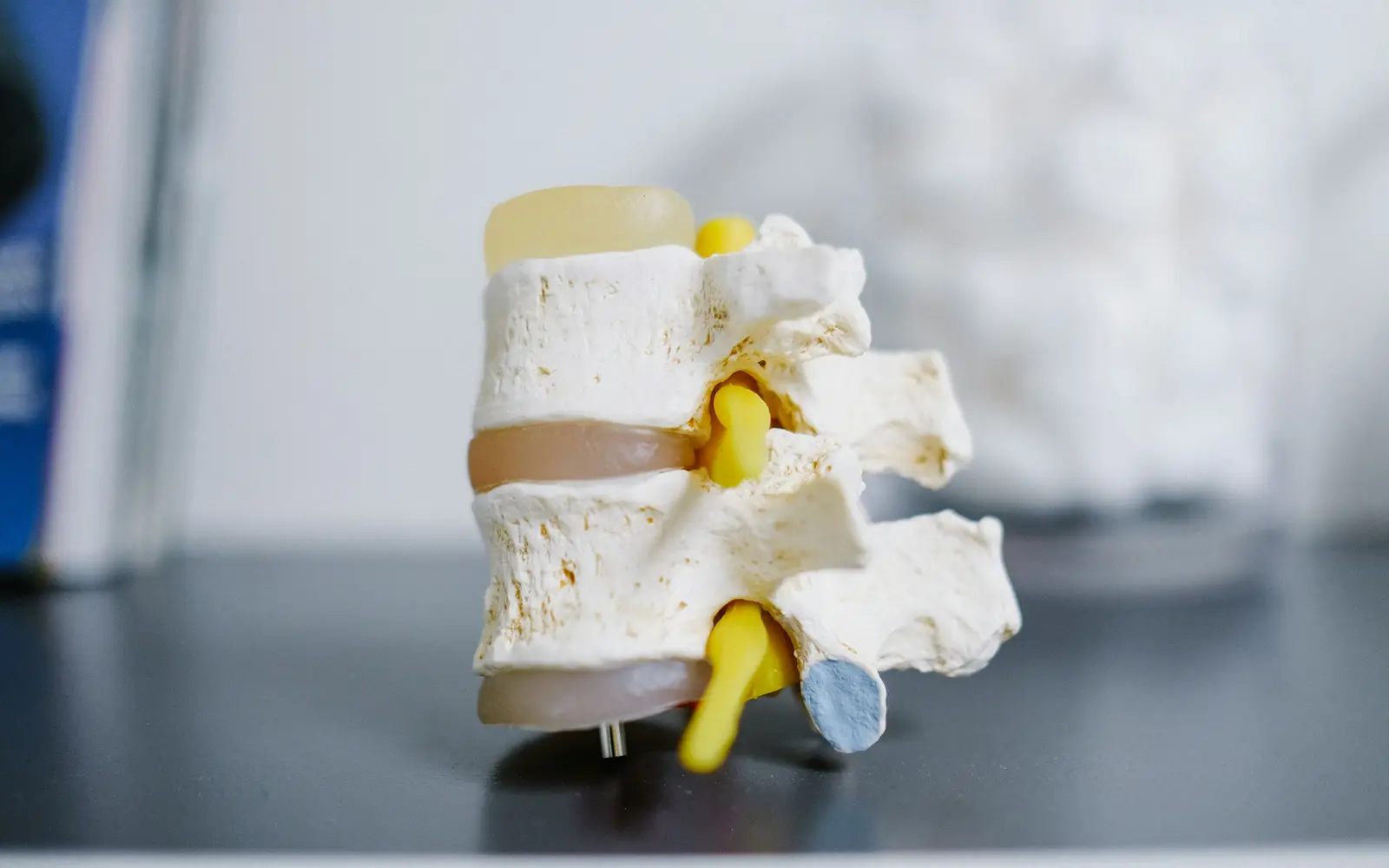
The disc is the cushion between two vertebrae (the bones of the spine). With age and wear it can lose height, crack, or bulge backwards against a nerve or the spinal cord. An artificial disc is usually made of two metal plates that fix to the bone above and below, often with a plastic or metal core between them that allows movement. Over a few months the bone grows onto the textured surface of the plates and holds them firmly.
The operation is also called total disc replacement or disc arthroplasty. It is done in the neck (cervical) and in the lower back (lumbar). The two are quite different operations, so this page explains each.
Keeping movement at that level is the main reason surgeons offer it. The idea is to reduce the extra load that a fusion places on the discs above and below. The research on how much difference this makes over many years is still building, and your surgeon can tell you how they weigh it for your case.
Who needs it
Disc replacement suits a narrower group of patients than fusion. A surgeon will consider it when:
- In the neck, a disc at one or two levels is pressing on a nerve root (causing arm pain, numbness or weakness, called radiculopathy) or on the spinal cord (causing myelopathy, with clumsy hands or an unsteady walk), and medicines and physiotherapy have not helped.
- In the lower back, back pain comes from a single worn disc, usually at the lowest two levels, and has not improved after several months of supervised treatment.
- The person is generally young to middle aged, with good bone strength and a spine that is otherwise well aligned.
When it is usually not suitable
Surgeons check carefully for reasons to choose another operation, because an artificial disc needs healthy surroundings to work. It is usually ruled out if you have:
- Osteoporosis (thin, weak bones), because the plates may sink into soft bone.
- Arthritis in the facet joints (the small joints at the back of each vertebra), since a moving disc will not relieve pain coming from those joints.
- Instability or a slipped vertebra (spondylolisthesis).
- Large bone spurs bridging the level, scoliosis, infection or a tumour.
- An earlier fusion or major surgery at the same level.
Reports the surgeon will ask for
- An MRI with the radiologist's report, which shows the discs, nerves and spinal cord.
- Standing X-rays, including flexion and extension views (taken bending forward and back) to check how much the level still moves and whether it is stable.
- A CT scan, which shows the bone and facet joints in more detail than MRI and helps rule out bone spurs or calcified ligament.
- A bone density scan (DEXA) if there is any doubt about bone strength.
- Nerve conduction studies or EMG if you have numbness or weakness in the arms or legs.
Because suitability depends so much on these details, sending clear, complete scans early makes a real difference. You can name a preferred country on the quote form or let hospitals in several countries quote. When MediCurage shares your case with partner hospitals, each one reviews the same reports and sends its own quote, so you can compare like with like.
How it is done
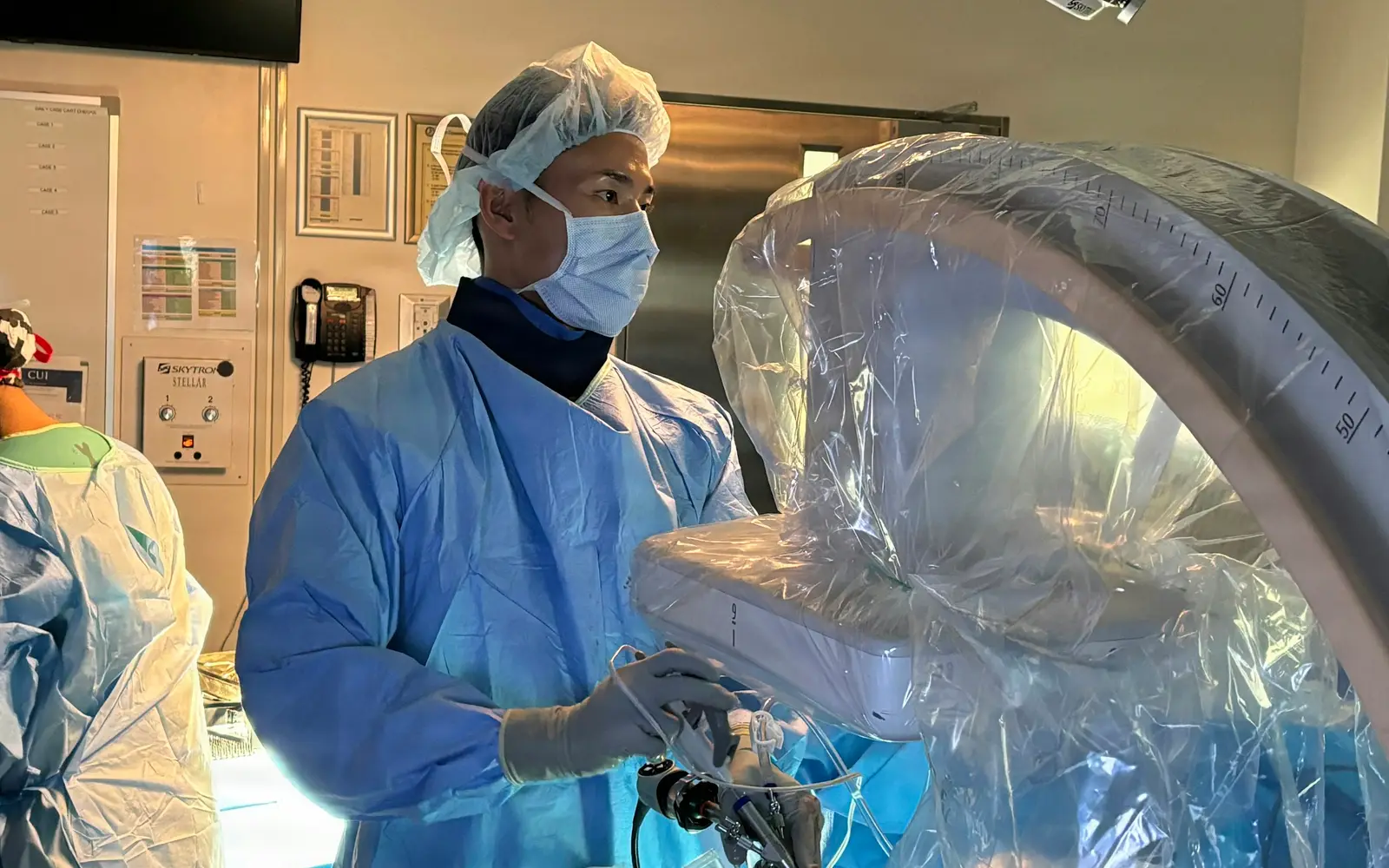
Cervical disc replacement. You are under general anaesthesia, lying on your back. The surgeon makes a small cut, usually in a skin crease at the front of the neck, and moves the windpipe and food pipe gently to one side to reach the spine. The worn disc and any bone spurs pressing on the nerves are removed. The surgeon sizes the space using live X-ray, then fits the artificial disc. One level usually takes one to two hours.
Lumbar disc replacement. This is reached from the front, through a cut on the lower abdomen. The bowel and the large blood vessels in front of the spine are moved carefully aside, often by a general or vascular surgeon working with the spine surgeon. The disc is cleared out completely, the space is restored to its proper height, and the implant is placed under X-ray guidance.
In some people with problems at two neck levels, the surgeon may replace one disc and fuse the other. This is sometimes called hybrid surgery.
Neuromonitoring (checking the signals in the spinal cord and nerves with small electrodes during the operation) may be used, particularly in the neck when the cord is under pressure.
Recovery and how long you stay
After a neck disc replacement, most people sit up and walk the same evening or the next morning, and go home after 1 or 2 nights. Swallowing can feel sore or slow for a week or two because of the pressure on the food pipe during surgery. Many patients find soft food easier during that time. A soft collar is used by some surgeons for comfort but is often not needed.
After a lower back replacement you will usually walk on the first day, and stay 2 to 4 nights. The abdomen may feel bloated and sore for a few days. Surgeons usually encourage walking often and advise against heavy lifting and sudden twisting for about six weeks. Your own surgeon will give you the exact limits for your implant and level.
Plan for about 12 days in the country where you are treated for a neck replacement, and up to 3 weeks for the lower back. That includes pre-operative tests, the hospital stay, a wound check and a review with X-rays to confirm the implant position. Many surgeons are comfortable with a long flight once that review is done. Most also suggest walking the aisle often during the flight and drinking plenty of water.
MediCurage arranges the stay and the hospital does the surgery. After a neck replacement, when swallowing is slow for a week or two, we look for a room with a kitchen or with soft food close by, and we book the return flight only after your surgeon's X-ray review.
Questions to ask your surgeon
- Am I a good candidate for disc replacement, or is fusion safer for my spine?
- What did you see on my CT scan about the facet joints and bone spurs?
- Which implant do you plan to use, and how long has it been in use?
- Will a general or vascular surgeon be part of the team for my lower back operation?
- How soon can I sit for a long flight, and should I carry an implant card?
- Which activities should I avoid in the first three months, and which can I go back to after that?
- If you find during surgery that my bone or joints are not right for a disc replacement, what will you do instead?
That last question is worth asking plainly. A surgeon who has already thought about it will give you a clear answer, and you will know before you sign the consent form exactly what you have agreed to.
Indicative cost by country
Ranges for a standard case at a private hospital. They help you plan; your chosen hospital's quote for your case is the figure to plan around.
- IndiaIndicative priceUS$5,500 to US$9,000Hospital stay1 to 4 daysTotal time in the country12 to 21 days
What the range usually covers: One-level artificial disc in the neck or lower back, surgeon and anaesthesia fees, and the listed hospital days. Each extra level adds to the cost. Excludes flights and hotel.
- TurkeyIndicative priceUS$7,000 to US$15,000Hospital stay1 to 4 daysTotal time in the country12 to 21 days
What the range usually covers: One-level artificial disc in the neck or lower back, surgeon and anaesthesia fees, and the listed hospital days. Each extra level adds to the cost. Excludes flights and hotel.
- ThailandIndicative priceUS$14,000 to US$20,000Hospital stay1 to 4 daysTotal time in the country12 to 21 days
What the range usually covers: One-level artificial disc in the neck or lower back, surgeon and anaesthesia fees, and the listed hospital days. Each extra level adds to the cost. Excludes flights and hotel.
- MalaysiaIndicative priceUS$15,000 to US$20,000Hospital stay1 to 4 daysTotal time in the country12 to 21 days
What the range usually covers: One-level artificial disc in the neck or lower back, surgeon and anaesthesia fees, and the listed hospital days. Each extra level adds to the cost. Excludes flights and hotel.
- MexicoIndicative priceUS$10,500 to US$16,000Hospital stay1 to 4 daysTotal time in the country12 to 21 days
What the range usually covers: One-level artificial disc in the neck or lower back, surgeon and anaesthesia fees, and the listed hospital days. Each extra level adds to the cost. Excludes flights and hotel.
Indicative range. Your final cost depends on your reports and the hospital you choose.
Questions families ask
How is disc replacement different from spinal fusion?
A fusion joins two vertebrae so the segment no longer moves. A disc replacement puts a mechanical joint in the disc space so the segment keeps moving. Not everyone is suitable for a replacement, and the surgeon decides which option fits your scans.
Can I have more than one disc replaced?
In the neck, one or two levels are commonly replaced. In the lower back, replacement is usually done at a single level. If you have worn discs at several levels, the surgeon may suggest a fusion or a combination of the two.
Why does lower back disc replacement go through the abdomen?
The disc sits at the front of the spine, so the surgeon reaches it from the front, moving the bowel and large blood vessels gently aside. Many hospitals have a general or vascular surgeon open and close this approach alongside the spine surgeon.
Will the artificial disc set off airport scanners?
It may. Ask the hospital for an implant card or a letter describing the device and keep it with your passport. Security staff see spinal implants often and the card answers their questions quickly.
What scans do I need before a quote for disc replacement?
An MRI with the report, standing X-rays including bending views, and a CT scan if you have one. Surgeons check the facet joints and bone quality closely before agreeing to a replacement, so the CT and a bone density scan are especially useful.
This page is general information. Your treating doctor decides your treatment plan.