
Overview
Liver cancer treatment is planned around two things at once: the tumour, and the liver it is growing in. Most primary liver cancers (cancers that start in the liver itself) are hepatocellular carcinoma, often shortened to HCC, which begins in the main liver cells. HCC usually appears in a liver that has been damaged for years by hepatitis B or C, alcohol or fatty liver disease. That damage, called cirrhosis when it causes heavy scarring, often limits how much treatment the liver can take.
A less common primary cancer is cholangiocarcinoma, which starts in the bile ducts, the small tubes that carry bile out of the liver. It is treated mainly with surgery when possible and with chemotherapy combined with immunotherapy when it is not.
Cancer that has spread to the liver from somewhere else, such as the bowel, breast or pancreas, is different again. Doctors call it secondary liver cancer or liver metastases, and it is treated according to where it began. This page is mainly about HCC.
The options range from a needle placed through the skin to a full liver transplant. A tumour board, a meeting where liver surgeons, hepatologists (liver physicians), interventional radiologists and oncologists review each case together, recommends which suits you. MediCurage arranges the travel and paperwork; the hospital team makes the decision.
Who needs it
Treatment depends on how many tumours there are, how large they are, whether they have grown into blood vessels, whether the cancer has spread outside the liver, how well the liver works and how active you are day to day. Many centres use the BCLC (Barcelona Clinic Liver Cancer) system, which links each stage to suitable treatments.
Tests that guide the plan
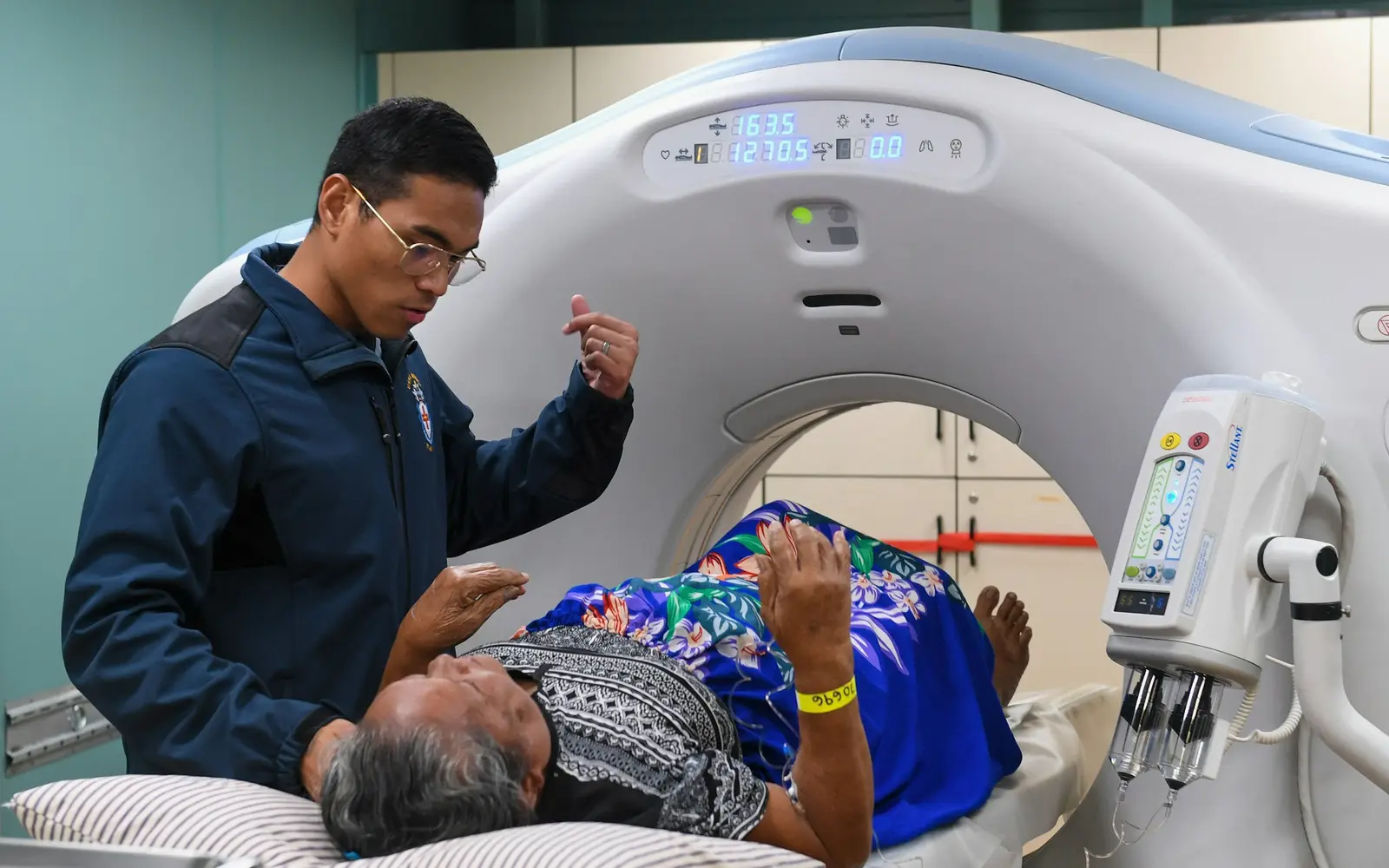
- Triple-phase CT or MRI. Images are taken at three set moments after a contrast injection, as the dye passes through the arteries and then the liver. HCC usually lights up early and fades quickly, a pattern that often allows diagnosis without a biopsy in someone with cirrhosis.
- AFP (alpha-fetoprotein). A blood marker that is raised in many, but not all, people with HCC. It helps with diagnosis and with checking later whether treatment is working.
- Liver function tests, including bilirubin (the yellow pigment that causes jaundice), albumin (a protein the liver makes) and INR (how quickly blood clots).
- Endoscopy in some patients, a camera passed through the mouth to look for enlarged veins in the gullet (varices) that can bleed.
Child-Pugh score
The Child-Pugh score sums up how well the liver is working. It combines bilirubin, albumin and INR with two signs doctors look for: fluid in the abdomen (ascites) and confusion caused by liver failure (encephalopathy). The result is a grade. A means the liver is working well, B means moderate damage and C means severe damage. Most treatments on this page are designed for people with grade A or good grade B function.
For a quote, hospitals ask for the CT or MRI images (a disc or download link, not only the report), recent blood results including AFP, any biopsy report and past hepatitis treatment. Name your preferred country on the quote form, or ask hospitals in several countries to quote.
How it is done
Liver resection
Resection, also called partial hepatectomy, removes the part of the liver that holds the tumour. It suits people with one tumour or a few tumours in one area, good liver function and no serious portal hypertension (raised pressure in the main vein entering the liver). The surgeon must leave enough healthy liver behind, which the team measures on the scans beforehand. Many resections are now done by keyhole (laparoscopic) or robotic surgery; others need an open operation through a cut under the ribs.
Ablation
For small tumours, often up to about 3 cm, ablation destroys the cancer with heat instead of removing it. A radiologist guides a thin needle through the skin into the tumour using ultrasound or CT, then heats it with radiofrequency energy (RFA) or microwaves. It takes an hour or two under sedation or general anaesthesia.
TACE and TARE
These treatments reach the tumour through its blood supply. A radiologist passes a fine tube (catheter) from an artery in the groin or wrist up to the artery feeding the tumour.
- TACE (transarterial chemoembolisation) delivers chemotherapy directly into the tumour, then blocks its blood supply. It is often used for several tumours that have not spread outside the liver. Fever, pain and nausea for a few days afterwards are common, and sessions may be repeated.
- TARE (transarterial radioembolisation), also called SIRT, delivers tiny radioactive beads instead. It needs a mapping procedure first and the treatment one to two weeks later. Not every hospital offers TARE, and MediCurage checks which hospitals in your chosen country can before you travel.
Transplant
For some people with cirrhosis and early cancer, a new liver treats both the tumour and the failing liver. Centres select patients carefully, often using the Milan criteria (one tumour up to 5 cm, or up to three tumours none larger than 3 cm, with no spread into vessels or outside the liver). Most international patients need a living donor, usually a close relative, and donor rules differ between countries. Our liver transplant page explains the process.
Drug treatment
When the cancer is too widespread for local treatment, drugs can control it. A common first choice is atezolizumab, an immunotherapy, given with bevacizumab, a drug that cuts the tumour's blood supply, by drip every three weeks. Because bevacizumab can raise the risk of bleeding, the team often checks for varices first. Other options include two immunotherapy drugs together (durvalumab and tremelimumab) or tablets such as lenvatinib or sorafenib. Precise radiation (stereotactic body radiotherapy) is also used for some tumours.
Recovery and how long you stay
The time you spend abroad depends mostly on which treatment you have.
- Ablation: one or two nights in hospital, and about two weeks in the country for tests, treatment and a check-up.
- TACE: one to three nights in hospital. Tiredness can last a week. Most people stay two to three weeks, which allows for the first follow-up blood tests.
- Liver resection: about five to ten days in hospital, then one to two weeks nearby so the surgeon can check the wound and blood results. Plan on three to five weeks in total.
- Drug treatment: many families stay for the first one or two cycles, then continue at home if the same drugs are available there.
Follow-up usually means a triple-phase scan and AFP test every few months, because HCC can come back in another part of a damaged liver. Your coordinator asks the hospital for a written summary so your doctor at home can arrange these scans.
Questions to ask your doctor
- Is this hepatocellular carcinoma, cholangiocarcinoma or cancer that has spread from elsewhere?
- What is my Child-Pugh grade, and how does it limit the options?
- Which stage is this, and which treatments has the tumour board considered?
- Is resection possible, and will enough healthy liver remain?
- Would ablation, TACE or TARE work as well for this tumour?
- Am I a candidate for a transplant now or later?
- Do I need treatment for hepatitis alongside the cancer treatment?
- Which follow-up scans and AFP tests do I need, and how often?
Ask the interpreter to read back the Child-Pugh grade and the stage so you can write them down. Those two answers shape most of what follows, abroad and with your doctors at home.
Indicative cost by country
Ranges for a standard case at a private hospital. They help you plan; your chosen hospital's quote for your case is the figure to plan around.
- IndiaIndicative priceUS$6,000 to US$12,000Hospital stay1 to 10 daysTotal time in the country14 to 35 days
What the range usually covers: Surgery only: liver resection (partial hepatectomy) with surgeon and anaesthesia fees, operating theatre, ICU and ward stay of about 7 days, and medicines during admission. Excludes scans and biopsy before surgery, ablation, TACE or TARE, drug treatment, flights and hotel, which are quoted separately.
- TurkeyIndicative priceUS$9,000 to US$18,000Hospital stay1 to 10 daysTotal time in the country14 to 35 days
What the range usually covers: Surgery only: liver resection (partial hepatectomy) with surgeon and anaesthesia fees, operating theatre, ICU and ward stay of about 7 days, and medicines during admission. Excludes scans and biopsy before surgery, ablation, TACE or TARE, drug treatment, flights and hotel, which are quoted separately.
- ThailandIndicative priceUS$20,000 to US$35,000Hospital stay1 to 10 daysTotal time in the country14 to 35 days
What the range usually covers: Surgery only: liver resection (partial hepatectomy) with surgeon and anaesthesia fees, operating theatre, ICU and ward stay of about 7 days, and medicines during admission. Excludes scans and biopsy before surgery, ablation, TACE or TARE, drug treatment, flights and hotel, which are quoted separately.
- MalaysiaIndicative priceUS$12,000 to US$26,000Hospital stay1 to 10 daysTotal time in the country14 to 35 days
What the range usually covers: Surgery only: liver resection (partial hepatectomy) with surgeon and anaesthesia fees, operating theatre, ICU and ward stay of about 7 days, and medicines during admission. Excludes scans and biopsy before surgery, ablation, TACE or TARE, drug treatment, flights and hotel, which are quoted separately.
- MexicoIndicative priceUS$20,000 to US$30,000Hospital stay1 to 10 daysTotal time in the country14 to 35 days
What the range usually covers: Surgery only: liver resection (partial hepatectomy) with surgeon and anaesthesia fees, operating theatre, ICU and ward stay of about 7 days, and medicines during admission. Excludes scans and biopsy before surgery, ablation, TACE or TARE, drug treatment, flights and hotel, which are quoted separately.
Indicative range. Your final cost depends on your reports and the hospital you choose.
Questions families ask
My father has cirrhosis and a liver tumour. Why do the doctors keep asking about his liver function?
In most people with hepatocellular carcinoma, the cancer grows in a liver that is already scarred. How well the rest of the liver works decides which treatments are safe, because surgery, TACE and some drugs all put extra strain on it. A tumour that could be removed in a healthy liver may need a different approach when liver function is poor.
The report says the cancer has spread to the liver from the bowel. Is that liver cancer?
It is treated differently. Cancer that starts elsewhere and spreads to the liver is called secondary liver cancer or liver metastases, and the plan follows the original cancer. Some liver metastases, particularly from bowel cancer, can still be removed by surgery or ablation, so send all the reports, including those for the original cancer, when you ask for a quote.
Does liver cancer always need a biopsy?
Not always. In a person with cirrhosis, a triple-phase CT or MRI can show a pattern typical enough for specialists to diagnose hepatocellular carcinoma without a sample. A biopsy is still taken when the scans are unclear, when the liver is otherwise healthy, or when the team needs more detail about the tumour before choosing drugs.
Can I have TACE abroad and repeat it at home?
Often yes, if a hospital in your country has an interventional radiologist who performs TACE. A scan about four to six weeks after each session shows whether another one is needed. Ask the treating team for a written summary of what was done and which arteries were treated, so the next team can carry on.
Is liver cancer always caused by alcohol?
No. Long-term hepatitis B or C infection is a major cause worldwide, and fatty liver disease linked to diabetes and excess weight is becoming more common. Alcohol is one cause among several, and some people develop liver cancer with no clear cause. The team will test for hepatitis, because treating it can protect the liver during cancer treatment.
This page is general information. Your treating doctor decides your treatment plan.