Overview
If you have worn glasses or contact lenses for years, laser eye surgery can reduce how much you depend on them, or let you stop using them for most of the day. It works by reshaping the cornea, the clear dome at the front of the eye that does most of the work of focusing light.
A laser can correct three kinds of focusing problem, known as refractive errors:
- Myopia (short sight): distant things look blurred.
- Hyperopia (long sight): close things blur first, and distance too if it is strong.
- Astigmatism: the cornea is curved unevenly, so things look stretched or blurred at any distance.
There are three main types of laser surgery.
LASIK (laser-assisted in situ keratomileusis) is the most familiar. A femtosecond laser (a very fast, precise laser) or a fine blade makes a thin flap in the top layer of the cornea. The surgeon lifts the flap, an excimer laser reshapes the tissue underneath, and the flap is laid back down, where it seals on its own. Vision usually clears within a day or two.
PRK (photorefractive keratectomy) uses no flap. The surgeon removes the thin skin on the surface of the cornea, called the epithelium, and applies the laser directly. A bandage contact lens protects the eye while the surface grows back over several days. Recovery is slower and more uncomfortable, but PRK can suit thinner corneas and people whose work or sport carries a risk of a blow to the eye.
SMILE (small incision lenticule extraction) uses a femtosecond laser to shape a small disc of tissue inside the cornea, which the surgeon then removes through a cut a few millimetres long. There is no flap. It is mainly used for short sight and astigmatism.
Who needs it
Nobody needs laser eye surgery for their health. It is a choice, and a careful surgeon will turn some people away. You are more likely to be suitable if:
- You are at least 18, and many surgeons prefer patients in their twenties or older.
- Your prescription has stayed stable for at least a year.
- Your eyes are otherwise healthy.
- You are not pregnant or breastfeeding, as hormones can change your prescription for a while.
Surgeons are usually cautious with, or advise against laser treatment for, people with keratoconus (a condition where the cornea thins and bulges), a thin cornea, severe dry eye, uncontrolled diabetes, some autoimmune diseases, or an early cataract. For people over about 50, replacing the lens inside the eye is sometimes a better fit than reshaping the cornea.
Suitability tests
The assessment takes a couple of hours and decides everything. It usually includes:
- Refraction: measuring your prescription, often again after dilating drops that relax the focusing muscle.
- Corneal topography or tomography: a scan that maps the shape of the front and back of the cornea. It can show early keratoconus that a normal examination would miss.
- Pachymetry: measuring corneal thickness. The laser removes tissue, and LASIK also uses some for the flap, so the surgeon calculates how much will remain. Many surgeons are careful with corneas thinner than about 500 microns (half a millimetre).
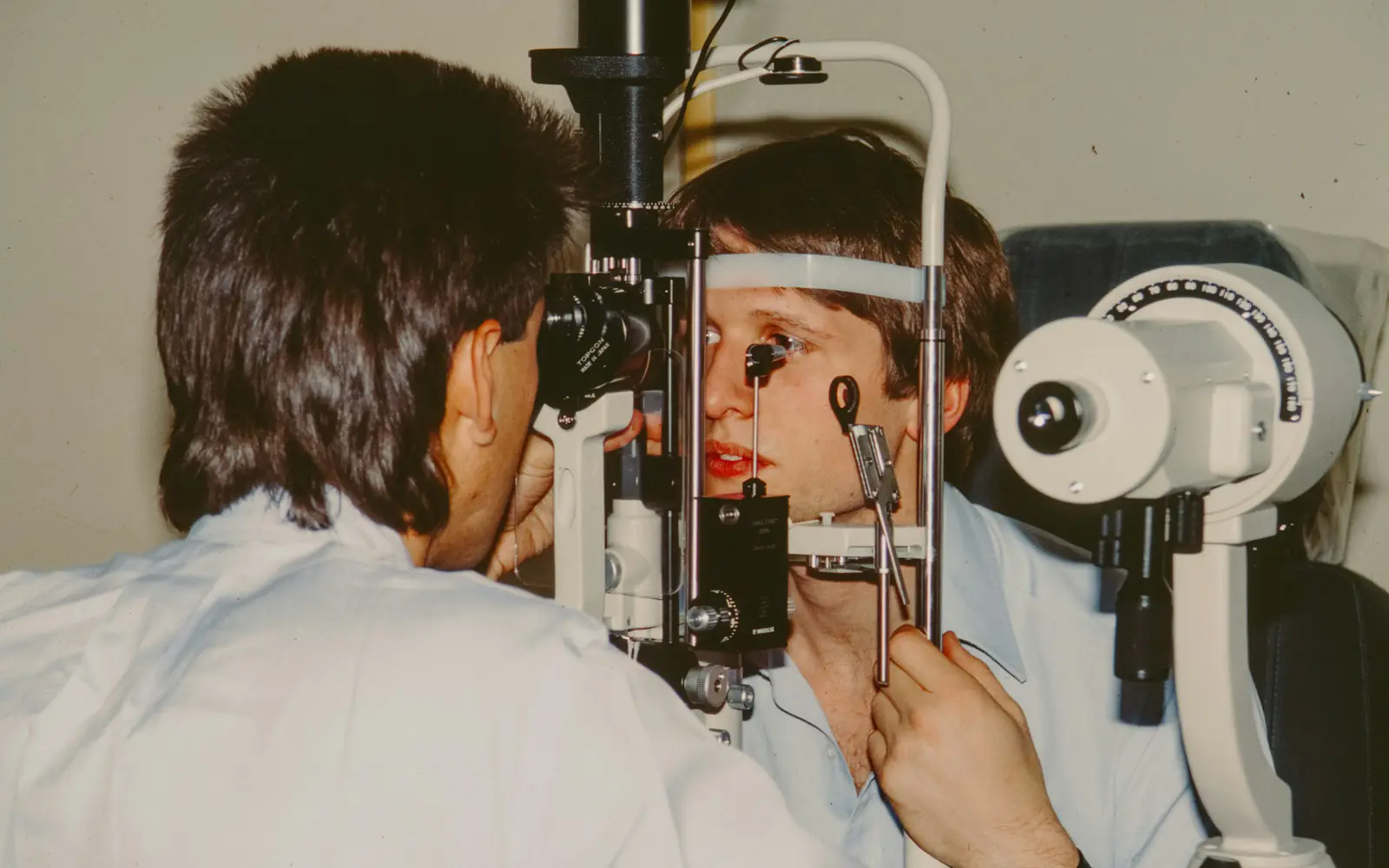
- Pupil size in dim light, tear film tests for dry eye, eye pressure, and a look at the retina through dilated pupils.
You will need to stop wearing contact lenses for a set time before these tests. Send your recent glasses prescriptions with your enquiry, as they show how stable your eyes have been.
How it is done
Laser eye surgery is day care. You are at the hospital for a few hours, and the time under the laser is short.
Numbing drops go in, and a small clip keeps your eyelids open. You lie under the machine and look at a small blinking light. For LASIK, a suction ring holds the eye still for the flap, and your vision dims for a few seconds while you feel pressure. The excimer laser usually runs for less than a minute per eye. You may hear clicking and notice a faint smell. Both eyes are normally treated in the same session, which takes about 15 to 20 minutes in all.
In PRK, the surface layer is loosened with a mild alcohol solution, a soft brush or the laser itself, and a bandage lens goes on at the end. In SMILE, one laser shapes the disc inside the cornea and the surgeon draws it out through the small opening.
Clear plastic shields go over your eyes, and someone must take you back to your room. You cannot drive that day.
Recovery and how long you stay
The first few hours bring watering, grittiness and sensitivity to light. Most people sleep and feel much better by the evening. You use antibiotic and steroid drops for about a week, plus lubricating drops for weeks or months, and wear the shields at night for around a week. Surgeons usually advise no eye rubbing, no swimming for about two weeks, and no eye make-up for about a week. Your own surgeon sets the exact limits.
After LASIK or SMILE, sight is often good the next day, though it may vary for a few weeks. Glare and halos around lights at night are common early on and usually settle over the following months. After PRK, vision improves more gradually over several weeks.
Dry eye is the most common side effect. The surgery cuts some of the tiny nerves in the cornea that tell your eyes to make tears. It usually improves over months with lubricating drops. If you already have dry eye, the surgeon will want it treated first.
Plan on 3 to 4 days for LASIK or SMILE: the assessment, the surgery, and the check the next morning before you fly. For PRK, allow about a week, so the bandage lens can be removed before you leave. You will not be able to drive, and bright daylight is uncomfortable for a day or so, so MediCurage books your room a short ride from the eye hospital and arranges the car to the procedure and the next day check. Checks at one and three months can be done by an eye doctor at home.
Questions to ask your surgeon
- From my scans, would you suggest LASIK, PRK or SMILE, and why not the others?
- How thick are my corneas, and how much will remain after treatment?
- Did the topography show any sign of keratoconus?
- Will you treat both eyes on the same day?
- What sight should I realistically expect, and might I still need glasses for night driving or reading?
- I already have dry eyes. What will you do about that?
- If I need a top-up treatment later, is it possible, and is it in the price?
- When can I fly, swim and go back to screen work?
- Which drops will I take home, and for how long?
Bring someone to the consultation who can note the surgeon's answers for you. The pupil drops can blur your vision for several hours afterwards, which makes reading your own notes harder than you would expect.
Indicative cost by country
Ranges for a standard case at a private hospital. They help you plan; your chosen hospital's quote for your case is the figure to plan around.
- IndiaIndicative priceUS$600 to US$1,800Hospital stayDay care, no overnight stayTotal time in the country3 to 7 days
What the range usually covers: Laser vision correction for both eyes, from standard LASIK at the low end to bladeless or SMILE at the high end, with the pre surgery eye checks and follow up visits. Excludes flights and hotel.
- TurkeyIndicative priceUS$1,400 to US$3,000Hospital stayDay care, no overnight stayTotal time in the country3 to 7 days
What the range usually covers: Laser vision correction for both eyes, from standard LASIK at the low end to bladeless or SMILE at the high end, with the pre surgery eye checks and follow up visits. Excludes flights and hotel.
- ThailandIndicative priceUS$2,000 to US$3,500Hospital stayDay care, no overnight stayTotal time in the country3 to 7 days
What the range usually covers: Laser vision correction for both eyes, from standard LASIK at the low end to bladeless or SMILE at the high end, with the pre surgery eye checks and follow up visits. Excludes flights and hotel.
- MalaysiaIndicative priceUS$1,500 to US$2,500Hospital stayDay care, no overnight stayTotal time in the country3 to 7 days
What the range usually covers: Laser vision correction for both eyes, from standard LASIK at the low end to bladeless or SMILE at the high end, with the pre surgery eye checks and follow up visits. Excludes flights and hotel.
- MexicoIndicative priceUS$1,500 to US$3,000Hospital stayDay care, no overnight stayTotal time in the country3 to 7 days
What the range usually covers: Laser vision correction for both eyes, from standard LASIK at the low end to bladeless or SMILE at the high end, with the pre surgery eye checks and follow up visits. Excludes flights and hotel.
Indicative range. Your final cost depends on your reports and the hospital you choose.
Questions families ask
Does LASIK hurt?
Numbing eye drops are used, so the procedure itself is not usually painful, though you will feel pressure for a few seconds. For a few hours afterwards the eyes often feel gritty and watery, and sleep helps. PRK is more uncomfortable for the first two or three days while the surface of the eye heals.
When can I fly home after laser eye surgery?
Many surgeons are happy for you to fly after the check on the day after LASIK or SMILE. Cabin air is dry, so carry your lubricating drops in your hand luggage, and use them as often as your surgeon advised. After PRK most surgeons prefer you to stay until the bandage contact lens comes out, usually after four or five days.
Will I still need reading glasses?
Laser surgery corrects your distance focus. From your forties onwards the natural lens inside the eye stiffens and close reading becomes harder, so you may need reading glasses later even after LASIK. Ask your surgeon whether monovision (one eye set for distance and one for near) suits you.
How long do I stop wearing contact lenses before the tests?
Contact lenses change the shape of the cornea, which would make the measurements wrong. Surgeons commonly ask you to stop soft lenses for about one to two weeks and rigid lenses for longer, often several weeks. The clinic gives you the exact time, so plan it before your flight.
What if my cornea is too thin for LASIK?
You may still be suitable for PRK or SMILE, which leave more of the cornea's strength intact. Some people are offered an implantable contact lens, a thin lens placed inside the eye, instead. Your surgeon decides after looking at the scans.
This page is general information. Your treating doctor decides your treatment plan.