Overview
A heart valve problem often begins long before anyone notices it. In East Africa, South Asia and Yemen it often traces back to rheumatic fever in childhood, which can follow a throat infection that was never fully treated and quietly scar the valves. Years later the person becomes breathless climbing stairs, and an echocardiogram finally explains why.
Your heart has four valves: the aortic, mitral, tricuspid and pulmonary valves. They open and close with every heartbeat so that blood moves in one direction. A valve can go wrong in two ways. It can become stiff and narrowed, called stenosis, so the heart has to push harder. Or it can fail to close properly, called regurgitation, so blood leaks backwards. Both make the heart work harder, and over time the muscle can weaken.
Valve replacement removes the damaged valve and puts in a new one. Sometimes the surgeon can repair the existing valve instead, especially the mitral valve. That choice is often made in the operating room once the surgeon can see the valve directly.
Who needs it
A cardiologist usually recommends valve surgery when the valve problem is severe on the echocardiogram and one or more of these is true:
- you have symptoms such as breathlessness, chest pain, fainting, swollen ankles or a fast irregular heartbeat
- the heart's pumping strength is starting to fall, or the heart is enlarging, even without symptoms
- a valve has been damaged by infection (endocarditis)
- you need heart surgery for another reason, such as bypass, and the valve is also affected
The aortic and mitral valves are the ones most often replaced. Rheumatic disease commonly affects the mitral valve and sometimes more than one valve at once, so double valve replacement is not unusual.
There are less invasive options for some people. Narrowed mitral valves from rheumatic disease can sometimes be stretched open with a balloon passed through a vein, without opening the chest. Narrowed aortic valves in older or higher risk patients can be treated with TAVI (transcatheter aortic valve implantation), where a new valve is guided up from an artery in the groin. Your reports decide which of these is realistic, and partner hospitals quote for the approach their team recommends, so you can compare like with like before choosing. You can name the country you prefer, or let hospitals in several countries quote and decide after you see the plans side by side.
How it is done
Choosing the valve
There are two main kinds of replacement valve.
| Mechanical valve | Tissue (biological) valve | |
|---|---|---|
| Made from | Carbon and metal | Animal tissue, usually from a pig or cow |
| How long it lasts | Usually for life | Wears out over years, may need replacing |
| Blood thinner | Every day, for life, with INR blood tests | Usually only for the first few months |
| Often chosen for | Younger patients | Older patients, or where INR testing is hard |
INR is a blood test that measures how thin the blood is. With a mechanical valve it must stay within a target range, so you need regular tests and dose changes for life. If a laboratory is far from your home, tell the surgeon. It matters.
Tests before surgery
After you arrive, the team spends one to three days on tests. These usually include an echocardiogram (an ultrasound scan of the heart), and often a transoesophageal echocardiogram, where a thin probe is passed down the throat under sedation to give a closer view of the valves. Adults past middle age or with risk factors usually have a coronary angiogram, an X-ray of the heart's arteries, in case bypass is needed at the same time. Expect blood tests, a chest X-ray, an ECG and a dental check. For TAVI, a CT scan measures the valve and the arteries it will travel through.
The operation
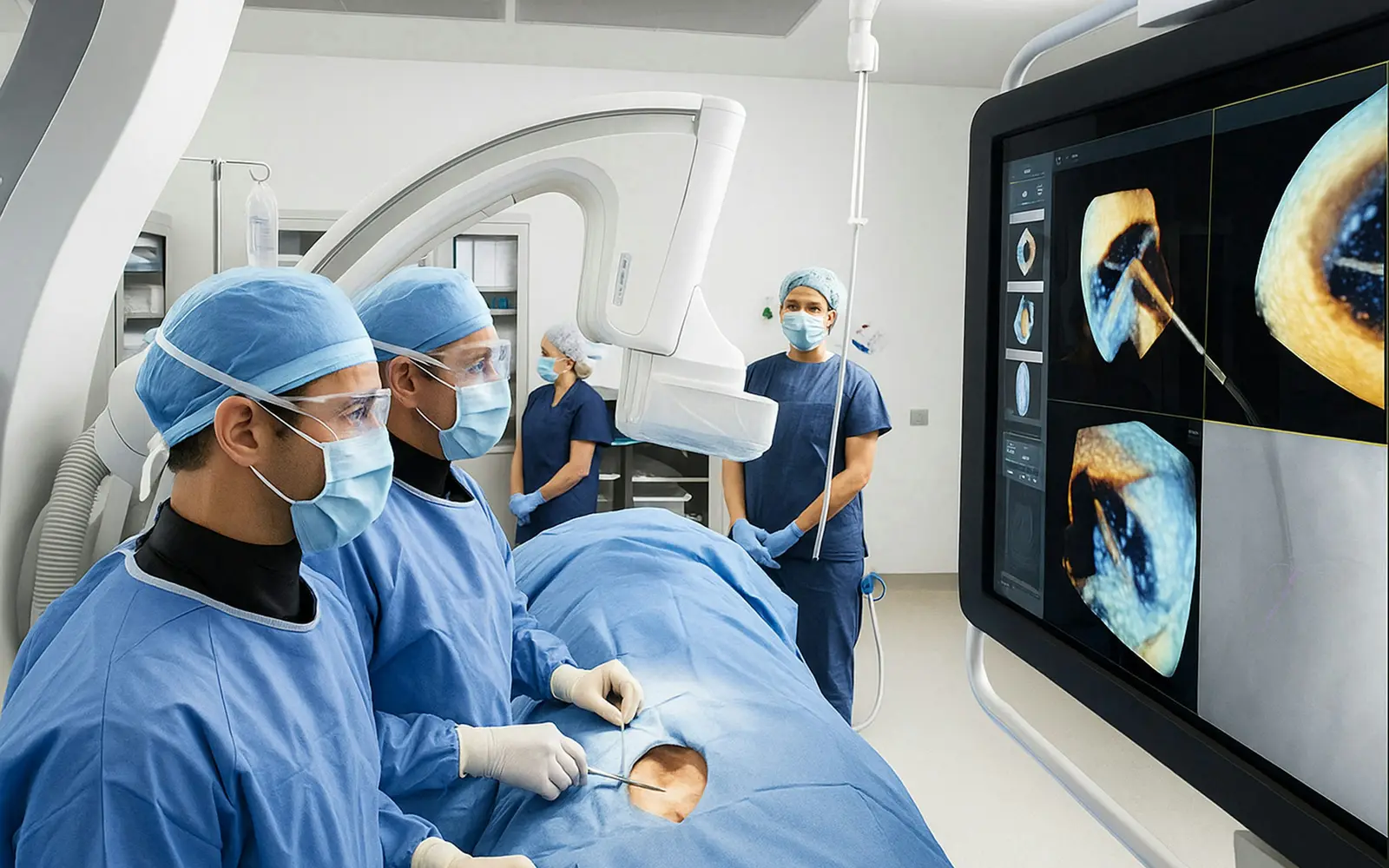
Open valve surgery is done under general anaesthesia and takes around three to five hours. Most operations go through the breastbone. Some aortic and mitral operations can be done through smaller cuts, depending on the patient and the surgeon. A heart-lung machine takes over the circulation while the surgeon removes the damaged valve and stitches the new one into place.
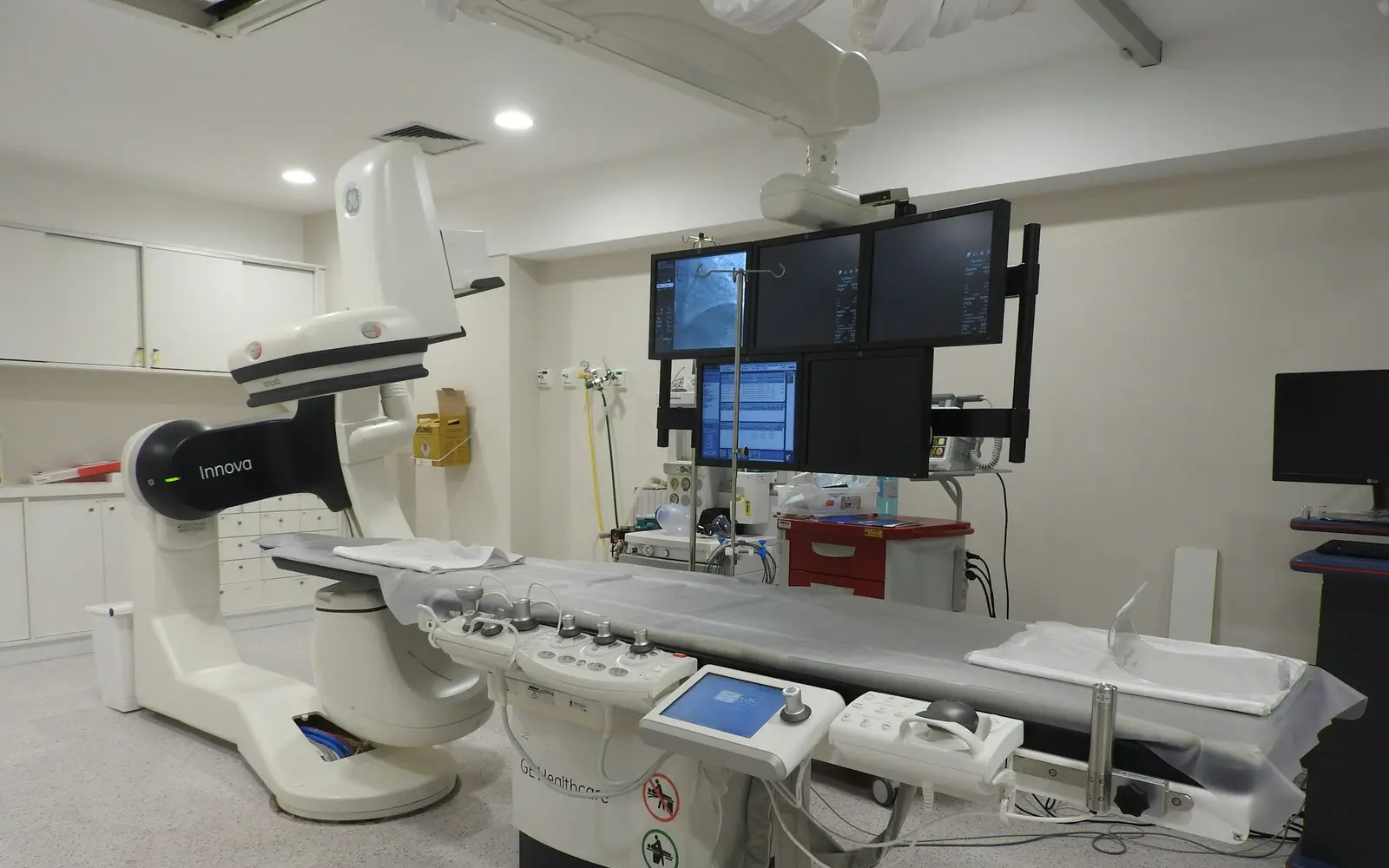
TAVI is different. It is usually done in a catheter laboratory, often with sedation instead of full anaesthesia, and the new valve is expanded inside the old one without stopping the heart.
Recovery and how long you stay
After open surgery, the first one or two days are in the cardiac ICU. The breathing tube usually comes out within hours, and chest drains are removed after a day or two. Patients sit out of bed early and walk on the ward within a few days. Most go home from hospital six to nine days after the operation. After TAVI, the hospital stay is usually shorter, often two to four days.
If you have a mechanical valve, the first days on warfarin or a similar blood thinner involve daily INR tests while the dose is adjusted. This can take a while to settle, and it is one reason to plan for the full 14 to 21 days in the country where you are treated. Skin stitches, if they are not the dissolving kind, are usually removed around 7 to 10 days after surgery. Your surgeon will see you again before clearing you to fly, often around 10 days after an uncomplicated operation.
At home, the breastbone needs two to three months to heal. Surgeons usually advise against heavy lifting and driving during that time, and your own surgeon will give you the exact limits. You will need:
- regular INR tests if you are on a blood thinner
- an echocardiogram at intervals your cardiologist sets
- antibiotics before some dental treatment, as your cardiologist advises
- a valve card stating the type of valve, to show any doctor or dentist
The hospital team sets your treatment and your dose. Your MediCurage coordinator and an interpreter are there for the daily INR results and the discharge briefing, so you understand the dose before you leave.
Questions to ask your surgeon
- Is my valve likely to be repaired or replaced, and how will you decide?
- Which type of valve do you recommend for me, and why?
- If more than one valve is affected, will you treat them in one operation?
- What INR range should I keep, and which blood thinner brand is available in my country?
- Is TAVI or a balloon procedure an option in my case?
- When should I have my next echocardiogram, and what signs should make me call a doctor straight away?
If you are going home with a mechanical valve, find out before you fly where your INR will be checked: an anticoagulation clinic (a clinic that checks INR and adjusts the dose), a cardiologist or a laboratory with a doctor who reads the results. The first test at home is often due within a week of landing, and it is far easier to name that place while your surgeon abroad can still speak to them.
Indicative cost by country
Ranges for a standard case at a private hospital. They help you plan; your chosen hospital's quote for your case is the figure to plan around.
- IndiaIndicative priceUS$6,000 to US$10,000Hospital stay6 to 9 daysTotal time in the country14 to 21 days
What the range usually covers: Replacement of one valve with a standard mechanical or tissue valve, surgeon and anaesthesia fees, and ICU and ward stay for the listed days. Excludes TAVI, a second valve, flights and hotel.
- TurkeyIndicative priceUS$14,000 to US$28,000Hospital stay6 to 9 daysTotal time in the country14 to 21 days
What the range usually covers: Replacement of one valve with a standard mechanical or tissue valve, surgeon and anaesthesia fees, and ICU and ward stay for the listed days. Excludes TAVI, a second valve, flights and hotel.
- ThailandIndicative priceUS$30,000 to US$40,000Hospital stay6 to 9 daysTotal time in the country14 to 21 days
What the range usually covers: Replacement of one valve with a standard mechanical or tissue valve, surgeon and anaesthesia fees, and ICU and ward stay for the listed days. Excludes TAVI, a second valve, flights and hotel.
- MalaysiaIndicative priceUS$17,000 to US$25,500Hospital stay6 to 9 daysTotal time in the country14 to 21 days
What the range usually covers: Replacement of one valve with a standard mechanical or tissue valve, surgeon and anaesthesia fees, and ICU and ward stay for the listed days. Excludes TAVI, a second valve, flights and hotel.
- MexicoIndicative priceUS$19,000 to US$48,500Hospital stay6 to 9 daysTotal time in the country14 to 21 days
What the range usually covers: Replacement of one valve with a standard mechanical or tissue valve, surgeon and anaesthesia fees, and ICU and ward stay for the listed days. Excludes TAVI, a second valve, flights and hotel.
Indicative range. Your final cost depends on your reports and the hospital you choose.
Questions families ask
Should I choose a mechanical valve or a tissue valve?
A mechanical valve usually lasts for life but needs a blood thinner every day, with regular blood tests. A tissue valve normally avoids lifelong blood thinners but wears out over time and may need replacing years later. The surgeon will recommend one based on your age, your other health conditions and whether regular blood tests are practical where you live.
Can I become pregnant after a mechanical valve?
It is possible, but the blood thinner warfarin can harm an unborn baby, so pregnancy needs careful planning with a cardiologist and an obstetrician. Women who hope to have children should tell the surgeon before the valve is chosen. This often changes the recommendation.
Is TAVI possible instead of open surgery?
TAVI is mainly used for a narrowed aortic valve, most often in older patients or those for whom open surgery carries higher risk. It needs a CT scan to check the valve size and the arteries in the legs. The heart team decides who is suitable, and many younger patients are still advised to have surgery.
Why do I need a dental check before valve surgery?
Bacteria from infected teeth or gums can travel in the blood and settle on a new valve, causing a serious infection called endocarditis. Most teams ask for any dental problems to be treated before the operation. If you can, see a dentist at home before you travel and bring the report.
Where do I get my INR checked after I go home?
Any laboratory that does a PT/INR blood test can do it, and most hospital laboratories offer it, from Kenya and Bangladesh to Germany and the Gulf. Before you leave the country where you were treated, find a doctor at home who will adjust your blood thinner dose. Your coordinator can share the discharge summary and the dosing plan with them.
This page is general information. Your treating doctor decides your treatment plan.