Overview
Radiation therapy, also called radiotherapy, uses high energy X-rays (or protons, in a few centres) to damage the DNA inside cancer cells so they cannot divide and eventually die. Normal cells in the path of the beam are affected too, but they are better at repairing themselves. That is why the total dose is split into many small daily doses called fractions.
Radiation is one of the main cancer treatments, alongside surgery and drug therapy. It can be used alone, with chemotherapy, before or after surgery, or to relieve symptoms such as bone pain or bleeding from an advanced cancer.
For a family travelling abroad, radiation is mostly about time and routine. Each session lasts minutes, but many curative courses run every weekday for five to six weeks, and with planning the stay abroad is usually six to eight weeks in total. That is a long stay, and the practical arrangements matter almost as much as the machine.
MediCurage takes no part in the treatment decision. The radiation oncologist (a cancer doctor who specialises in radiation) decides the dose and technique with the hospital's tumour board, and because you will go to the radiation centre every weekday, we look for a stay a short drive away from it.
Who needs it
Radiation is part of the plan for many cancers, including:
- Head and neck cancers, as the main treatment or after surgery.
- Breast cancer, after breast conserving surgery and after some mastectomies.
- Cervical, prostate, rectal, lung, brain and oesophageal cancers.
- Cancer that has spread to bone or the brain, to control pain or other symptoms.
Whether you need it, and which type, depends on the type and stage of the cancer (how large it is and how far it has spread), any operations already done, earlier radiation to the same area and your general health. A part of the body that has been treated once can only safely receive a limited amount of radiation again, so the team will ask carefully about earlier treatment.
For a quote, hospitals usually ask for the biopsy report, the operation notes and final pathology report if you have had surgery, recent scans with images (CT, MRI or PET-CT), and records of any earlier radiation, including the dose and the area treated. You can name the country you prefer on the quote form, or let hospitals in several countries quote so you can compare.
How it is done
Consultation and planning
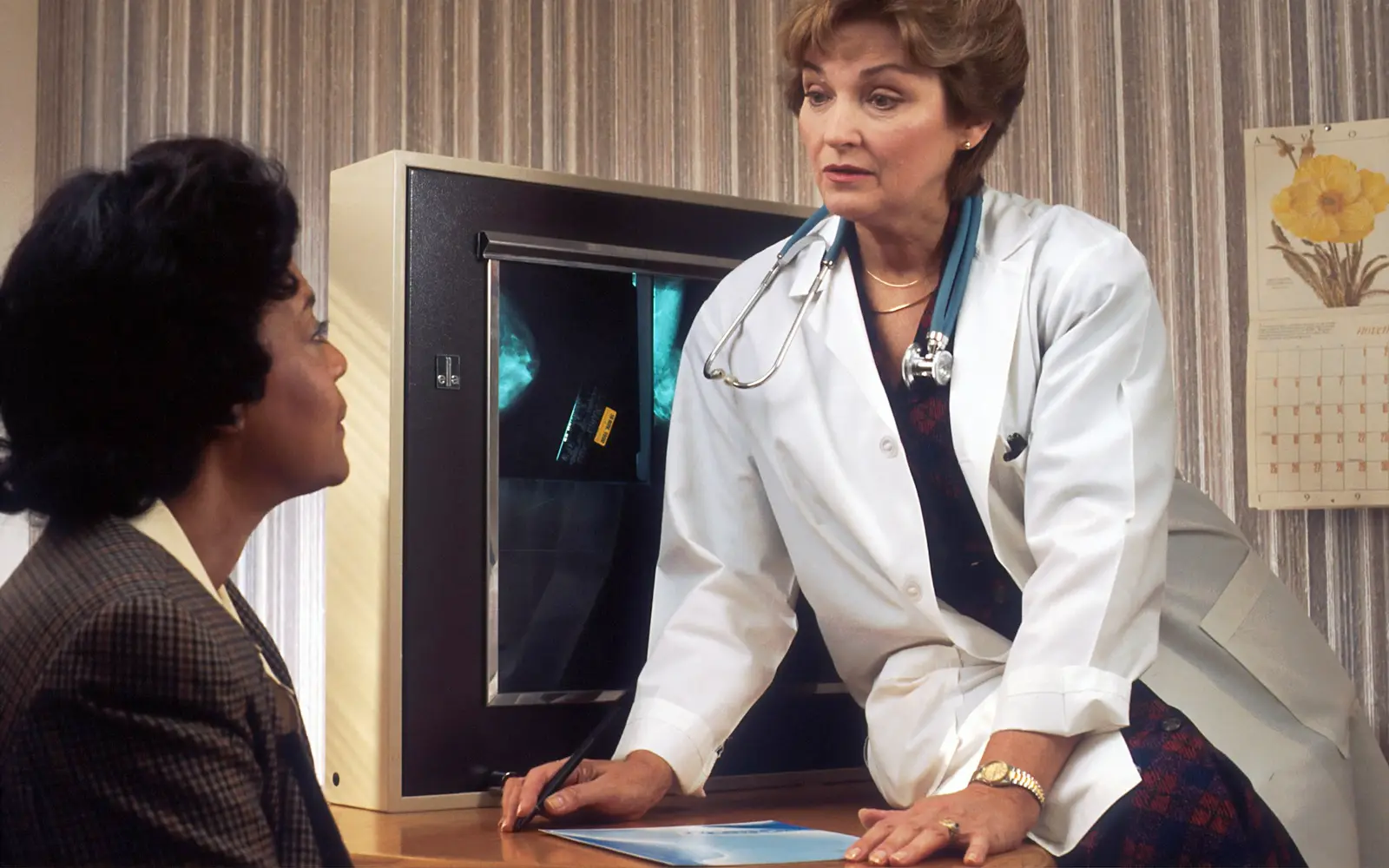
You first meet the radiation oncologist, who examines you, reviews the scans and explains the plan. Then comes simulation, a planning CT scan taken in the exact position you will lie in for every session. For head and neck or brain treatment, a plastic mask is moulded to your face to keep your head still. For other areas a cushion or body mould is used, and small permanent ink dots may be tattooed on the skin as alignment marks. Some centres can use skin marker pen instead, so ask if you would prefer that.
Using this scan, the radiation oncologist outlines the tumour and the organs to protect, and medical physicists design the beams. The plan is checked and approved before treatment begins. Planning usually takes about a week.
Common techniques
- IMRT (intensity-modulated radiotherapy): the strength of the beam varies across its shape, so the dose follows the tumour closely and spares nearby organs. VMAT is a faster form in which the machine rotates around you while it treats.
- IGRT (image-guided radiotherapy): scans taken on the treatment machine before each session confirm that you are in exactly the right position.
- SBRT or SRS (stereotactic radiotherapy): very precise, high doses in a few sessions, usually between one and eight, for small tumours in the lung, liver, spine or brain.
- Brachytherapy: a radioactive source is placed inside or next to the tumour for a short time. It is common in cervical cancer and is sometimes used for prostate and other cancers.
A treatment day
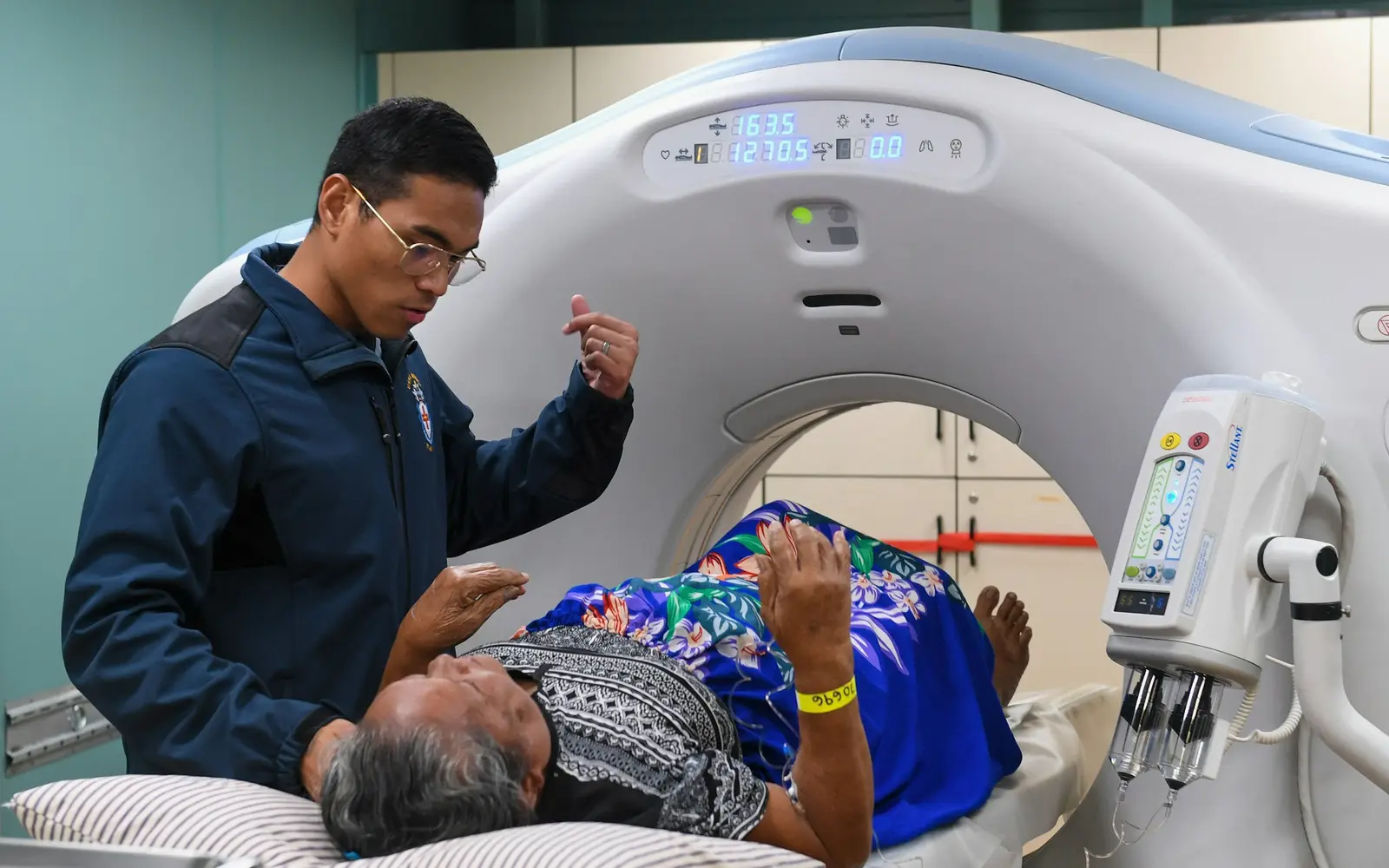
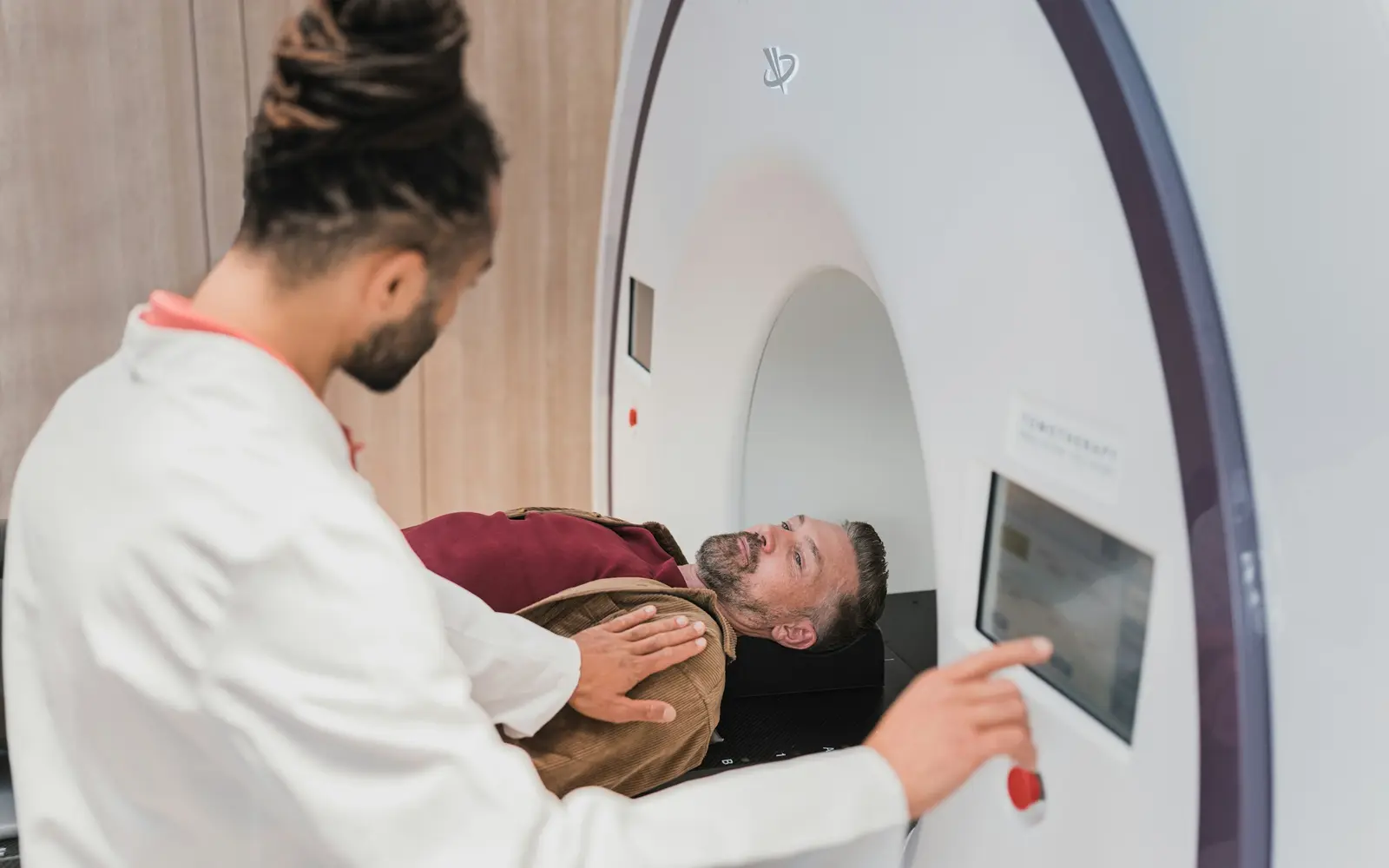
Sessions run Monday to Friday, with weekends off. You change into a gown and lie on the treatment couch, and the radiographers position you using the marks or the mask. They leave the room and watch you on a camera. The beam is on for only a few minutes, and the whole visit often takes 15 to 30 minutes. You feel nothing during treatment. The radiation oncologist sees you once a week to check for side effects.
Recovery and how long you stay
Many curative courses are 25 to 30 sessions, which means five to six weeks of weekday treatment after about a week of planning. Add the first consultation and a review at the end, and six to eight weeks in the country where you are treated is a realistic total. Some cancers, such as head and neck, need up to 35 sessions, and the stay is then at the longer end or a little beyond it. Shorter courses exist. Some breast treatments take one to three weeks, stereotactic treatment takes one to two weeks, and radiation for pain relief can be a single session or a few days. Radiation is almost always given as an outpatient, so hospital nights are needed only for some brachytherapy or when chemotherapy given at the same time requires admission.
Side effects are mostly limited to the area treated. They build up gradually and tend to peak near the end of the course and in the two weeks after it. Tiredness is common. Skin in the treated area may redden, dry out and feel sore. Head and neck radiation causes a sore mouth and a dry mouth. Pelvic radiation can cause loose stools and passing urine more often. Most early effects settle within weeks of finishing.
During the course, staying close to the hospital makes a real difference. A short daily trip leaves more energy for eating and resting. Your coordinator arranges transport for each session, checks in with the family between the weekly reviews, and makes sure the interpreter is present when the radiation oncologist discusses side effects. Before you fly home, ask for the treatment summary, which records the dose and the area treated. Any doctor who treats you in future will need it.
Questions to ask your doctor
- Is the aim of radiation in my case to cure, to control the cancer or to relieve symptoms?
- How many sessions will I have, and over how many weeks?
- Which technique will you use, and why?
- Will I have chemotherapy at the same time?
- Which side effects should I expect, and when do they usually start?
- How should I look after my skin and mouth during treatment?
- Are there late effects I should watch for in the years after?
- Will you give me a written treatment summary to take home?
If the hospital allows it, ask for a copy of the planning images as well. Should you ever need treatment near the same area again, the next team can see exactly what was done, which can save time.
Indicative cost by country
Ranges for a standard case at a private hospital. They help you plan; your chosen hospital's quote for your case is the figure to plan around.
- IndiaIndicative priceUS$3,500 to US$7,000Hospital stay1 to 2 daysTotal time in the country40 to 56 days
What the range usually covers: A full course of IMRT, usually 25 to 35 outpatient sessions, including planning scans and weekly review. Excludes chemotherapy, flights and hotel.
- TurkeyIndicative priceUS$6,500 to US$12,000Hospital stay1 to 2 daysTotal time in the country40 to 56 days
What the range usually covers: A full course of IMRT, usually 25 to 35 outpatient sessions, including planning scans and weekly review. Excludes chemotherapy, flights and hotel.
- ThailandIndicative priceUS$8,000 to US$16,000Hospital stay1 to 2 daysTotal time in the country40 to 56 days
What the range usually covers: A full course of IMRT, usually 25 to 35 outpatient sessions, including planning scans and weekly review. Excludes chemotherapy, flights and hotel.
- MalaysiaIndicative priceUS$6,000 to US$13,000Hospital stay1 to 2 daysTotal time in the country40 to 56 days
What the range usually covers: A full course of IMRT, usually 25 to 35 outpatient sessions, including planning scans and weekly review. Excludes chemotherapy, flights and hotel.
- MexicoIndicative priceUS$5,500 to US$22,500Hospital stay1 to 2 daysTotal time in the country40 to 56 days
What the range usually covers: A full course of IMRT, usually 25 to 35 outpatient sessions, including planning scans and weekly review. Excludes chemotherapy, flights and hotel.
Indicative range. Your final cost depends on your reports and the hospital you choose.
Questions families ask
Will I be radioactive after external radiation?
No. With external beam radiation the machine is switched off after each session and nothing stays in your body, so you can be close to children and family. Some types of internal radiation are different, and the team will give you clear instructions in those cases.
Can I miss a day if I feel tired?
Radiation teams usually ask you not to. The total dose is planned across the whole course, and unplanned gaps can make treatment less effective. If you feel unwell, tell the radiation team, who can treat the side effects and decide whether any change is needed.
Why does planning take so long?
After the planning CT scan, the radiation oncologist and medical physicists outline the tumour and nearby organs slice by slice and calculate the beams. This usually takes about a week, sometimes a little longer, and the plan is checked before the first session. That careful work is what lets the dose fit the tumour closely.
Do I need to stay in hospital during radiation?
Most patients come in each weekday as outpatients and return to their accommodation the same day. Admission is needed only for some types of brachytherapy, or when chemotherapy given alongside radiation or side effects require it.
Is a shorter course possible?
For some cancers, yes. Breast radiation is often given over three weeks or even one, and stereotactic radiation for small tumours takes one to two weeks. Head and neck, cervical and many other cancers still need six to seven weeks, and the radiation oncologist decides based on the cancer and its position.
This page is general information. Your treating doctor decides your treatment plan.